
AI news ·
AI hallucinations in US courts increase nearly sevenfold
Leading AI legal tools have a 17% error rate, producing fake citations in 1,667 court matters. Lawyers face two-year disqualifications for submitting them.
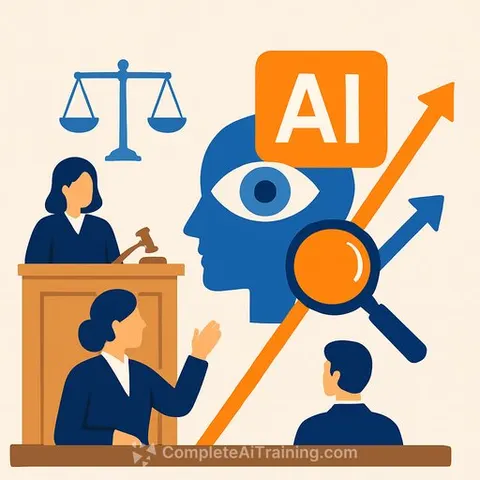
Attorneys using AI tools for legal research are citing fake cases at an accelerating rate, with a new study documenting 1,667 court matters tied to AI hallucinations by mid-2026 - nearly seven times the 230 cases logged just a year earlier. The findings expose a systemic reliability gap in legal research software that has already cost multiple lawyers their licenses.
Hallucinations occur when a generative AI tool invents fluent, confidently stated falsehoods. A legal research assistant asked to find supporting precedent might produce a citation with a real judge's name, a plausible case number, and fabricated text. Attorneys who file that output without verifying it end up explaining themselves to the bench.
Damien Charlotin's global database of AI-related legal misconduct now tracks more than 1,600 incidents. The jump from roughly 230 to 1,667 in one year is driven partly by wider adoption and partly by the stubborn error rates of the tools themselves. Lexis+ AI and Thomson Reuters systems, two of the leading legal research platforms, produced incorrect information more than 17% of the time in benchmarked evaluations. Certain assessments pushed that figure past 34%.
Lawyers face real sanctions
On June 9, 2026, a US District Judge disqualified two attorneys for two years after they submitted AI-generated legal research containing hallucinations. In April of the same year, Sullivan and Cromwell - one of the most prominent law firms in the world - admitted to a court that a bankruptcy filing included fake citations created by AI. A February 2026 report from the National Center for State Courts flagged hallucinations as a growing institutional problem affecting both courts and practitioners.
The difference between omission and fabrication
The legal profession has absorbed technology shocks before. E-discovery software, predictive coding, and online databases all faced reliability concerns before settling into everyday practice. The failure mode with generative AI is fundamentally different. A broken e-discovery filter might miss relevant documents. A hallucinating AI invents documents that never existed and delivers them with full confidence. Omission is manageable. Fabrication is dangerous.
A liability generator, not a productivity tool
Investors and law firms poured significant momentum into legal AI research tools over the past few years, but a system that returns wrong answers 17% to 34% of the time cannot be called a productivity asset. It creates billable-hour risk, malpractice exposure, and reputational damage with every unverified query. For legal teams building their technology strategy, AI for Legal workflows must start from the assumption that the output is suspect until confirmed.
Why this matters for legal professionals
Judges are no longer treating AI blind spots as understandable mistakes. Two-year disqualifications, public admissions of fake filings, and institutional warnings from state courts signal that the grace period for learning as you go has ended. Every firm that deploys an AI research tool needs a mandatory verification step - a human lawyer confirming each citation against the actual case reporter. For paralegals and associates now expected to use these platforms under time pressure, structured training is not optional. AI Learning Path for Paralegals focuses on the specific skills needed to work with legal research tools while avoiding the hallucinations that imperil a firm's standing. The technology is only as safe as the verification habits built around it.