AI in HR: Operational, Legal, and Vendor Risks You Need to Control
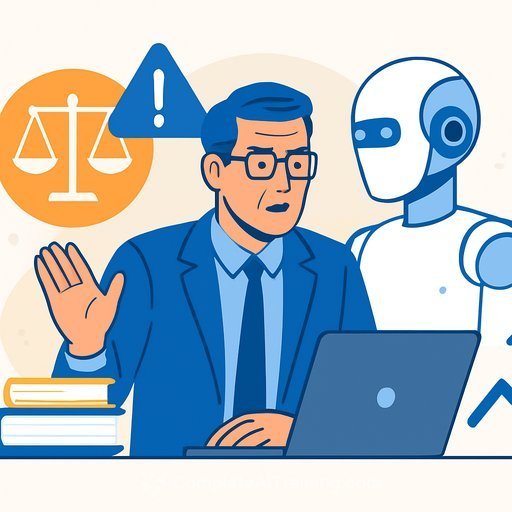
AI is moving into hiring, performance management and workforce analytics. The prize is speed and scale. The price is risk - bias, opaque decisions and regulatory heat - especially where HR already carries heavy data governance duties.
The mandate is simple: make AI useful without creating liability. That means tighter organizational safeguards, earlier legal involvement, and stronger vendor oversight. As one leader put it, "HR is a very people-driven system, so responsible AI can't just be about the technology. It has to involve the people implementing it and the people affected by it."
Regulation is catching up - and it targets HR
Regulators care most about automated decisions that affect people's livelihoods. In Europe, new AI rules emphasize transparency and human oversight, while the GDPR gives individuals the right to get human review and contest automated outcomes. See GDPR Article 22 for the baseline everyone should already be meeting.
Irish regulators have said the habits built under GDPR - DPIAs, risk documentation, and clear records of how you mitigated issues - map cleanly to AI in HR. Keep that muscle strong. In the U.S., states like California, Colorado and Illinois are pressing on automated decision-making, and litigation is picking up. As one U.S. practitioner warned, the risks "are definitely much higher than they've ever been," and many companies must retrofit programs and train HR and IT teams.
Turn principles into process
Principles look good in a slide deck. They don't manage risk. You need an AI review process that actually runs - with intake, risk scoring, testing, approvals, and post-deployment monitoring - so you can prove you identified and reduced risk before anything touched a candidate or employee.
Build human-in-the-loop by default wherever AI influences hiring, promotion, pay, or termination. Require explainability standards that a non-technical HR manager can understand and apply. If the team can't explain an output, they can't oversee it.
Involve legal early - or pay for it later
Too often, legal is pulled in after a tool is already bought or piloted. By then, you've lost leverage to get the protections you need. Get legal into procurement early to set requirements on data use, model changes, audit rights, and bias testing.
One expert's take was blunt: legal is "often brought in too late," and key protections never make it into the contract. Fix the sequence, and you fix half the risk.
Vendors don't remove your responsibility
Outsourcing recruiting, screening, and analytics does not outsource liability. Employers remain on the hook for how vendors' AI is used. Treat vendors as extensions of your HR operation, not black boxes you hope are compliant.
Red flag: teams using models they don't understand. Know what data the system relies on, what it lacks, where it fails, and how often it's tested. Without that, you can't provide "meaningful oversight."
What HR, Legal, and Operations should do in the next 90 days
- Inventory AI in HR: list every tool influencing people decisions (hiring, promotion, performance, pay, termination).
- Classify risk: prioritize use cases with high impact on individuals; require human review and documented rationale.
- Stand up an AI review process: intake form, DPIA/AI assessment, bias testing, approval gates, and monitoring.
- Tighten data governance: define permissible data, retention, access, and logs for all AI-driven HR workflows.
- Update policies and notices: tell candidates and employees where AI is used, how it's overseen, and how to contest outcomes.
- Train your people: give HR and hiring managers practical training on tool limits, oversight steps, and escalation paths.
- Vendor contracts: require transparency on model logic, data sources, retraining, and performance; add audit and termination rights.
- Bias and performance testing: set pre-deployment thresholds, test in your data context, and monitor drift over time.
- Document everything: keep contemporaneous records of risks found, actions taken, and approvals - regulators will ask.
Contract clauses that save you
- Use restrictions: limit vendor use of your data (no training on your PII without written approval).
- Testing and reporting: require pre-release and periodic bias/performance reports specific to your use case.
- Change control: notice and approval for material model changes that affect outcomes or risk profile.
- Audit and cooperation: rights to audit, obtain logs, and run independent tests; vendor duty to assist with DPIAs and inquiries.
- Liability allocation: clear indemnities for discrimination claims tied to tool behavior and noncompliance.
Keep the human at the center
The most useful perspective came from a leader focused on responsible AI: HR involves people first. Technology serves them. Bake that into your processes - from design, to testing, to how disputes get resolved - and your program gets stronger fast.
Resources to go deeper
Bottom line: make AI helpful, fair, and well-documented - with humans in control. Do that, and you'll move faster with less risk.
Your membership also unlocks: