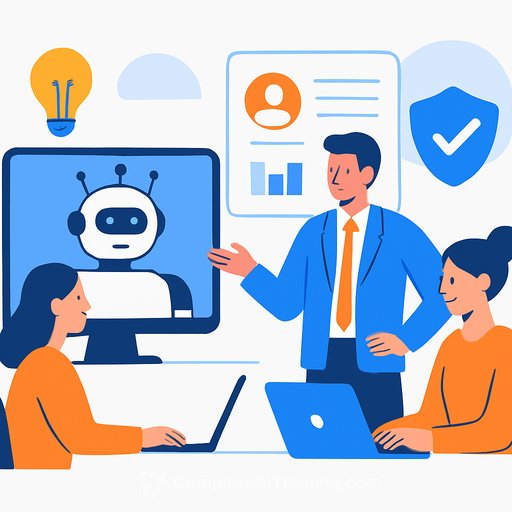
How AI is enabling better human resources
HR's biggest AI questions aren't about models or servers. They're about how humans and intelligent systems work together to serve people better.
Used well, AI becomes a catalyst for strategic change, ethical governance, and inclusive leadership. It gives HR teams fast access to context and information, frees capacity for high-value work, and creates more space for real conversations about culture, succession, and strategy.
Inside Insight: a hands-on approach
Insight, a global IT solutions integrator, chose to adopt AI within its own HR function before advising clients. The goal was simple: remove friction from employee experience, test what generative AI can do in real workflows, and deepen the team's understanding of AI architecture.
"We have looked at AI as a catalyst to reimagine and transform the HR function," said Insight's people and culture director for Asia Pacific, Elyse Philippi. "We operate a centre of excellence model, and we are looking at how we can utilise AI to better collaborate across these centres and provide a better experience for our teammates."
Tools that earned trust
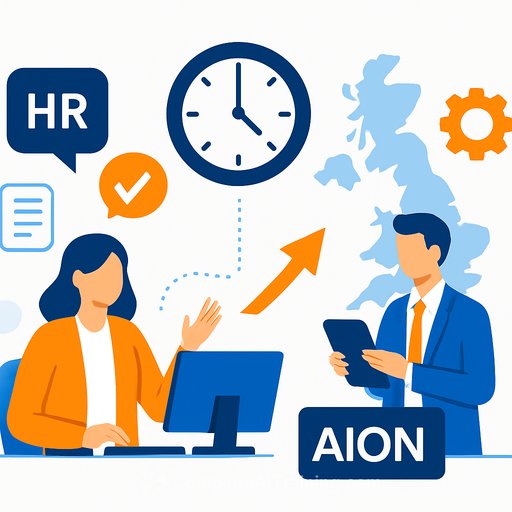
Two initiatives stood out. InsightGPT, an enterprise-grade generative AI tool trained specifically for the company, was built in eight weeks. AskHR, an HR-focused agent, now answers employee questions with speed and consistency.
The outcomes were tangible: time saved, better access to accurate information, improved sentiment, and more meaningful engagement with HR business partners. As Philippi put it, "Our team members are spending less time on repetitive queries, and more time on essential conversations around culture, succession and strategy."
Learning and development that sticks
AI is also embedded in development. PowerSkills supports growth in human-centred capabilities, while AI Flight Academy lifts AI knowledge across roles and levels. The emphasis: expectations, guardrails, and bias awareness-so people feel confident and capable using AI at work.
For HR teams building similar programs, frameworks like the NIST AI Risk Management Framework can help structure risk, bias, and oversight practices.
Safety, privacy, and governance by design
HR data is sensitive. Insight put guardrails first: strict data protocols to meet internal policy and external market expectations, and a private deployment of AI using Microsoft Azure OpenAI to ensure information stays inside the organisation.
Equally important: AI tools were not created in isolation. Cross-functional oversight, regional user testing, and deliberate change management ensured usability and reduced bias. Human oversight remained a requirement-AI speeds decisions, but it doesn't remove individual accountability.
What worked-and why
- Process before tech: fix the workflow, then apply the model.
- Treat employees like customers: measure experience, reduce friction, iterate.
- CoE collaboration: align policy, people, and platforms from day one.
- Private-by-default data design: protect trust and accelerate adoption.
A practical HR playbook you can use this quarter
- Identify three recurring HR pain points (e.g., policy queries, onboarding questions, benefits updates).
- Create a single, accurate knowledge base for policies and FAQs.
- Deploy a private AI assistant for HR queries; start with internal FAQs and expand.
- Stand up a cross-functional working group (HR, legal, risk, IT, D&I) to review prompts, outputs, and data handling.
- Define guardrails: access controls, data retention, human-in-the-loop checkpoints.
- Pilot with a small cohort; collect feedback on accuracy, tone, and usefulness.
- Train managers and HR partners on effective prompts, bias checks, and escalation paths.
- Roll out change communications that explain benefits, limitations, and how to give feedback.
- Instrument everything: measure time saved, case volume, deflection, and satisfaction.
- Iterate every two weeks; ship small, safe improvements.
Metrics that prove value
- Time to resolve HR tickets and the deflection rate to self-service.
- Employee satisfaction with HR interactions and information clarity.
- Time saved by HR business partners on repetitive queries.
- Adoption and completion rates for AI learning modules; skills uplift over time.
- Compliance adherence for data handling and model usage.
Pitfalls to avoid
- Launching tools without a clean policy knowledge base.
- Ignoring bias testing or leaving it to one function.
- Using public models for sensitive HR data.
- Automating decisions without clear human checkpoints.
- Skipping change management and expecting organic adoption.
- Failing to set clear ownership for maintenance and continuous improvement.
Your 90-day starter plan
- Days 0-30: Map top HR use cases, consolidate policies, define guardrails, select private AI infrastructure, and set success metrics.
- Days 31-60: Build an HR assistant (FAQ + policy queries), run pilot with selected teams, train HR partners, and set up measurement dashboards.
- Days 61-90: Expand content coverage, refine based on feedback, add learning modules, and introduce human-in-the-loop review for sensitive cases.
Keep your team learning
Upskilling is the multiplier. Give your people practical training for their role, not generic lectures. A curated path by job function can accelerate adoption and confidence. Explore options at Complete AI Training - Courses by Job.
The bottom line
AI won't replace the human side of HR. It strengthens it. With the right guardrails, private infrastructure, and human oversight, AI clears the busywork so your team can focus on judgment, empathy, and strategy. Start small, move with intent, and keep people at the centre.
Your membership also unlocks: