
AI news ·
AI labs near automating their own research and development cycles
AI labs are nearing systems that can design and improve themselves without human input. A survey of 25 experts found nearly all believe automated AI research could trigger an intelligence explosion-20 called it a severe and urgent risk.
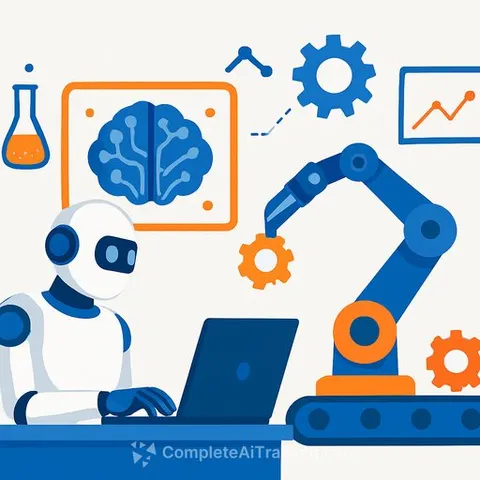
AI Labs Edge Closer to Self-Improving Systems
AI research and development cycles are accelerating toward full automation, with systems that can design, debug, and optimize themselves without human intervention. Major AI labs are approaching the point where machines will conduct their own R&D, creating feedback loops that could dramatically speed up AI capability development.
The concept dates back to 1966, when computing pioneer I.J. Good predicted an "intelligence explosion" if an ultraintelligent machine could design even better machines. That recursive self-improvement is now moving from theory toward practice.
Where We Stand Now
AI has already been used in AI design for years. New coding models can now debug themselves and optimize their own architectures-capabilities that were manual tasks just recently.
Humans remain in the loop for now. But design cycles are shrinking. A researcher told IEEE Spectrum that true self-improving systems are "right around the corner."
What Experts Are Saying
A survey of 25 AI experts last year found consensus on the trajectory. All but two said automating AI research could trigger an intelligence explosion. Twenty of the 25 rated it a "severe and urgent" risk.
The speed matters. Once machines begin researching and improving themselves without human review at each step, the feedback loop becomes exponential rather than linear.