
AI news ·
AI matches top doctors in cancer and heart disease detection but experts say human judgment remains essential in medicine
AI matches top doctors at detecting cancer and heart disease, but hospitals are keeping humans in charge. Machines can diagnose faster - they can't read a patient's fears or circumstances.
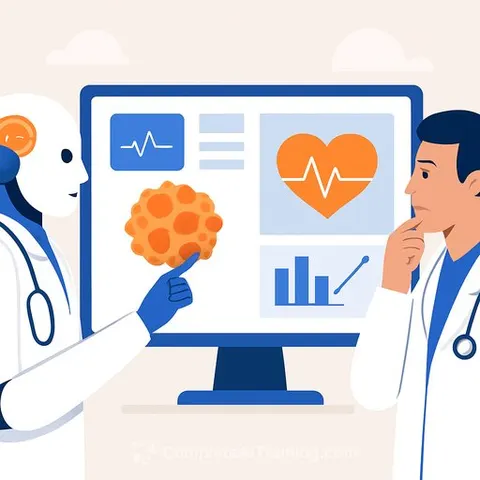
AI matches top doctors on cancer and heart disease diagnosis, but hospitals are betting on human judgment to stay
Medical schools and hospitals worldwide are debating whether artificial intelligence will replace doctors in operating rooms and radiology centers. Recent studies show AI systems detecting malignant tumors and heart disease with accuracy that matches or exceeds top consultants. The question isn't whether machines can diagnose faster-they can. It's whether they can do what doctors do.
AI systems analyze medical scans and suggest treatment protocols in seconds without fatigue or distraction. This speed reduces human error, particularly in early diagnosis where timing matters. Tech advocates argue machines excel at tasks requiring analysis of massive medical data sets.
Where algorithms fall short
Health experts say AI sees symptoms but not patients. Machines lack what doctors call human judgment-understanding a patient's psychological state, social circumstances, and fears. A diagnosis is not just a mathematical output. Patients need someone who reads between the lines of their medical history and recognizes what they're not saying.
This gap is why the medical field is moving toward what experts call "hybrid medicine." In this model, machines act as smart assistants that enhance diagnostic precision, while doctors retain final authority over patient care.
What this means for healthcare workers
The stethoscope isn't becoming obsolete. Instead, doctors are becoming more precise. AI for Healthcare works best when it augments human expertise rather than replaces it. Healthcare professionals who understand how to work alongside AI data analysis tools will likely be better positioned to deliver faster, more accurate care.
The future of medicine isn't algorithms versus stethoscopes. It's both working together.