
AI news ·
Big tech's AI health tools risk locking out 70 million Americans with disabilities
Major AI health tools from Amazon, Microsoft, and others are being deployed without accessibility testing, locking out millions of users with disabilities. Federal rules require compliance by 2026, but deployment is already outpacing it.
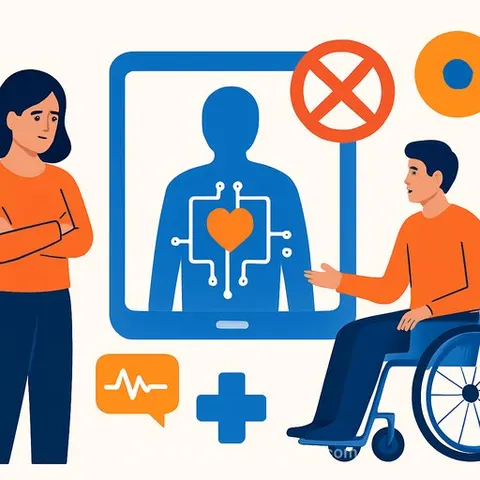
Big Tech's Health AI Tools Are Leaving People With Disabilities Behind
Amazon expanded its AI health assistant to millions of users. Microsoft launched Copilot Health, linking medical records and wearable data into one interface. Anthropic and OpenAI both released healthcare-focused models for consumers. The message is consistent: AI is becoming the front door to care.
What these announcements didn't address: more than 70 million U.S. adults live with a disability-28.7% of the adult population. For a substantial share of them, the front door doesn't open. It doesn't have a handle.
Digital tools created new barriers
Healthcare spent decades chasing better access through telehealth, patient portals, and digital intake forms. For many patients, these tools worked. For others, they introduced barriers that fall hardest on people with disabilities.
A patient who is blind using a screen reader tries to book an appointment and hits unlabeled buttons. A person with limited hand mobility gets stuck when a chatbot doesn't accept keyboard input. These aren't hypotheticals. The CDC reports that 1 in 4 working-age adults with disabilities lack a usual healthcare provider. Cost matters, but it's not the whole story. When digital systems connecting patients to providers can't work with assistive technology, they become one more closed door.
Now add AI on top. These new health assistants aren't side features-they're primary contact points for hundreds of millions of users. Microsoft says its consumer products field more than 50 million health questions daily. Amazon's assistant funnels users into clinical pathways, including pay-per-visit channels for 30 common conditions. If those tools don't work with screen readers, voice input, or switch navigation, you're not talking about inconvenience. You're talking about a new category of health disparity, where the design of an AI tool quietly determines who gets easy access to a clinician and who doesn't.
Accessibility wasn't built in
Nobody at Amazon, Microsoft, or these other companies sat down and decided to exclude patients with disabilities. What happened is simpler and more frustrating: accessibility wasn't treated as a design requirement. It got filed under "later" or didn't get filed at all.
Healthcare has a long track record of this pattern. Screen reader users report that healthcare ranks among the least accessible digital experiences they encounter, alongside travel booking and mobile apps. Scheduling appointments, filling out digital forms, finding provider hours, checking insurance coverage-each task can become impossible when a platform hasn't been tested with assistive technology. Industry audits of healthcare websites consistently find hundreds of accessibility violations per page: unlabeled form fields, missing alt text, color contrast that fails basic thresholds.
A 2025 research framework in SAGE Journals was direct about the problem: most AI health tools were built without meaningful input from people with disabilities. The result is systems that risk producing biased outcomes through poor service quality, misclassification, or outright exclusion. The researchers identified gaps that AI could help close-limited access to health information, too few providers who understand disability, and digital tools that shut disabled users out. But that only works if accessibility is part of the initial build, not an afterthought bolted on after someone files a complaint.
Regulators are setting deadlines
The Department of Health and Human Services finalized rules requiring healthcare providers receiving federal funding to meet WCAG 2.1 Level AA accessibility standards for patient-facing digital services by May 2026. Smaller organizations get until May 2027.
But those rules were written for websites and apps. They don't account for the speed at which AI interfaces are replacing traditional care touchpoints. When a chatbot is how patients describe symptoms, get triaged, and enter a clinical pathway, the accessibility stakes are different. It's no longer about whether a website checks the right boxes. It's about whether someone using a screen reader or voice commands can complete an AI-driven health interaction at all.
For most of these tools, nobody can answer that question yet. Deployment is outpacing testing by a wide margin.
What needs to change
Health systems evaluating AI for Healthcare tools should demand accessibility conformance reports before procurement, with the same urgency they bring to HIPAA compliance. Developers need to test with assistive technologies during the build, not six months after launch. Companies like Amazon and Microsoft should disclose how their tools perform for users with disabilities. If they're publishing clinical validation data, accessibility performance belongs in the same conversation.
This doesn't require a breakthrough. It requires a shift in priorities and a commitment to AI Design practices that include all users from the start.
People with disabilities already face documented barriers to care. They delay treatment at higher rates. They're more likely to have unmet medical needs. AI could reduce some of those barriers by making health information more conversational and easier to act on. But that only happens if the people building these tools decide, from day one, that accessibility isn't optional.