
AI news ·
AI moves from multifamily back offices to construction sites
McCarthy Building Cos. inked a multimillion-dollar deal with Palantir for an AI operating system. The platform, Pulse, gives field teams real-time data and risk analysis.
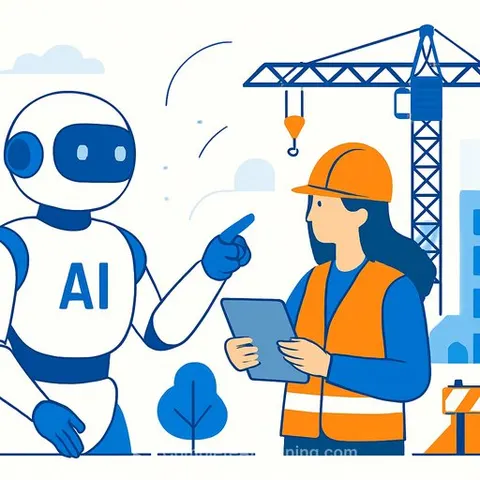
McCarthy Building Cos. signed a multiyear, multimillion-dollar agreement with Palantir in early June to build a connected AI operating system for its construction operations. The deal, one of the clearest signals yet that enterprise AI is moving from back offices to job sites, gives field teams real-time data, scenario planning, and risk analysis through a platform called Pulse.
The system runs on Palantir's Artificial Intelligence Platform and is designed to support workers from design through active building. Construction Dive reporter Matthew Thibault first reported the partnership, which reflects a strategic bet that AI infrastructure will soon be as critical to job sites as scheduling software and safety protocols.
AI moves past scheduling and into the field
James Garner, Head of AI and Data at Gleeds and a member of the RICS Construction Professional Group Panel, told Multi-Housing News that AI has already made headway in project management and back-office tasks. But those applications, he said, are early steps. The bigger shift involves connecting AI directly to field operations, including coordinating onsite robots alongside human crews.
Garner, who has more than two decades in the construction industry and has helped shape data and AI standards at RICS, described robotics integration as a near-term frontier rather than a distant concept. The infrastructure being built today-connected data platforms, interoperable standards-is laying the groundwork for that next phase. This push to embed intelligence in field workflows tracks with what many operations leaders are seeing across industries, where AI for Operations is shifting from experimental pilots to deployed tools that change how decisions get made onsite.
Data quality and culture slow adoption more than cost
Even well-funded AI initiatives stall on two obstacles: data readiness and organizational culture. Construction firms generate enormous volumes of project data, but much of it sits in formats AI systems cannot use. Garner said getting that data structured and accessible is a prerequisite many companies underestimate.
The cultural barrier matters just as much. Garner outlined four distinct mindsets he sees across construction organizations, ranging from skeptics who reject any role for AI to advocates pushing for broad deployment. "The willingness of teams to trust and adopt new tools often matters more than the cost of the technology itself," he told Multi-Housing News. Bridging those gaps, he argued, is where leadership attention should focus.
Investors and insurers are paying attention
Garner also told Multi-Housing News that capital and risk markets are beginning to scrutinize how construction firms use AI. Investors and insurers increasingly view AI adoption as a signal of operational sophistication and risk management capability. That dynamic gives large contractors additional incentive to formalize their AI strategies-not only to improve efficiency but to shape how financial stakeholders perceive them.
The McCarthy-Palantir partnership fits that pattern. Rather than deploying point solutions for specific tasks, McCarthy is building a connected operating system meant to scale across project types and teams. The multiyear commitment signals that at least some large contractors now treat AI as strategic infrastructure, not a pilot.
Robotics as the physical endpoint
Both the McCarthy deal and Garner's analysis point toward robotics as the eventual convergence of AI's analytical and physical dimensions. Construction robots are not yet standard on multifamily job sites, but the data platforms and standards being developed now will determine how quickly that changes. Garner was clear on one design principle: "AI should support decision-making, not replace the professional judgment of the people responsible for a project's outcome."
Why this matters for operations
For operations leaders in construction, the McCarthy-Palantir deal is not just a vendor announcement. It is a signal that AI investment is moving from back-office efficiency into the physical workflows where schedules, safety, and margins are won or lost. Firms that delay getting their data into structured, AI-ready formats-or that skip the cultural work of bringing skeptical teams on board-will face a widening gap as competitors build the infrastructure that makes robotics integration and real-time field intelligence possible. The window to build that readiness is open now, but it will not stay open indefinitely.