
AI news ·
AI offers law enforcement practical tools to improve officer safety and cut administrative work
Police departments are using AI to cut paperwork, speed up pre-scene briefings, and flag dangerous locations faster. Experts say strict oversight and public transparency are required before deployment.
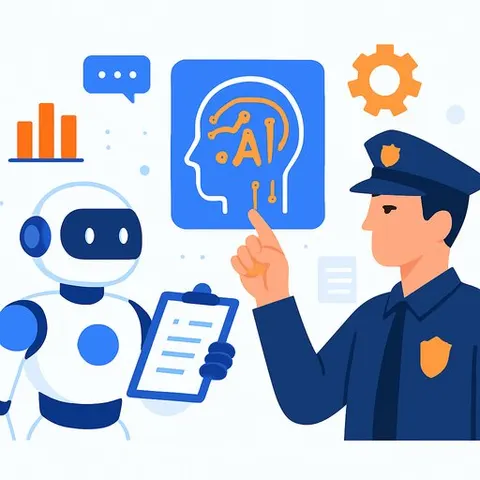
AI can improve officer safety and free up time for police work, but implementation requires strict guardrails
Law enforcement agencies are integrating artificial intelligence into operations to reduce officer risk, streamline administrative work, and improve decision-making during high-pressure situations. The technology works best when paired with clear policies, oversight, and community transparency.
AI systems can provide officers with critical information in seconds. When responding to a call, officers can access incident data, criminal records, and community reports before arriving on scene. This allows them to identify patterns of violence, recognize repeat offenders, or flag locations with histories of dangerous activity - information that once took hours to compile.
The first minutes at a scene are often the most dangerous. Better preparation reduces uncertainty and enables smarter deployment decisions.
Reducing administrative burden
Officers spend significant time on paperwork: incident reports, court schedules, citations, and shift management. This administrative work pulls them away from community engagement and frontline duties.
Natural language processing tools can draft reports based on officer input, ensuring consistency while freeing time for police work. AI-driven scheduling systems can optimize shift assignments and manage court appearances, helping agencies maintain appropriate staffing levels without overburdening individual officers.
When administrative tasks decrease, job satisfaction increases and officers can focus on their core mission.
Building safeguards before deployment
AI integration in law enforcement requires collaboration between technologists, agencies, policymakers, and communities. Standards must govern data privacy, algorithmic transparency, and bias detection.
Systems should undergo rigorous testing and independent review before use. Officers need training not only on how to use these tools but also on their limitations and ethical implications.
Public trust depends on transparency. Communities need to understand that AI protects officer and public safety - not that it enables unchecked surveillance. Agencies should communicate clearly how systems work, what data they use, and how decisions are made.
What comes next
Agencies will likely adopt drone first responders, real-time language translation, and predictive systems that enhance safety. But technology alone solves nothing. Success depends on thoughtful implementation, safeguarding citizens' rights, and involving communities in the process.
For government decision-makers overseeing law enforcement technology, understanding responsible AI implementation is essential. The AI Learning Path for Policy Makers covers governance, oversight, and ethical deployment frameworks relevant to public sector AI use.
Learn more about AI for Government applications across the public sector.