
AI news ·
AI-related incidents rise 50% annually as liability exposure outpaces coverage, WTW warns
AI-related insurance claims rose 50% year over year from 2022 to 2024, and 2025 incidents already surpassed the prior year's total. Most policies still lack explicit AI language, leaving gaps across liability, cyber, and D&O coverage.
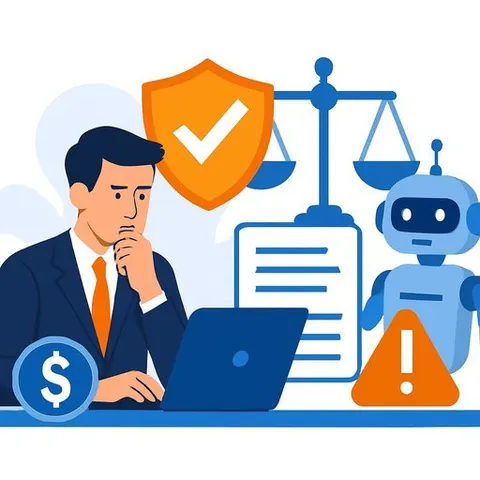
AI Incidents Have Doubled in Two Years. Insurance Hasn't Caught Up.
AI-related insurance claims rose roughly 50% year over year from 2022 to 2024, and 2025 incidents already exceeded the entire previous year's total before that year ended, according to WTW's Willis Research Network. Yet most policies lack explicit language addressing AI risks, leaving insurers and their clients exposed across multiple coverage lines simultaneously.
The problem mirrors silent cyber exposure before 2019, when ambiguous policy language created disputes only after claims materialized. WTW calls this the "silent AI" problem: losses sit embedded across general liability, professional indemnity, cyber, employment practices liability, and directors and officers policies, invisible until a claim forces interpretation.
Four Types of AI Risk Are Spreading Across Insurance Lines
AI-related losses follow multiple pathways into insurers. When AI causes bodily injury or property damage in autonomous vehicles, industrial systems, or medical devices, courts apply traditional negligence and product liability frameworks. When AI causes financial loss, attribution disputes arise among model developers, data providers, system integrators, and end users, with losses landing across technology errors and omissions, professional indemnity, and D&O policies.
The report organizes AI risk into four categories: performance risk, misuse risk, governance risk, and systemic risk. Each maps to different liability theories and insurance triggers.
Systemic risk poses the greatest challenge for insurers and reinsurers. When shared dependencies on a small number of models, vendors, or infrastructure providers fail, a single AI failure could trigger losses across thousands of insureds and multiple lines simultaneously. This concentration undermines the diversification assumptions that reinsurance models rely on.
High Accuracy Doesn't Equal Trustworthiness
A joint study by Willis Research Network and Rutgers Business School tested eight leading large language model assistants across six dimensions: accuracy and reliability, consistency and robustness, privacy and data security, bias and fairness, transparency and explainability, and governance and accountability.
No system met the researchers' "adequate" threshold for data protection. Privacy gaps were widespread, with consumer-tier offerings frequently lacking clear deletion guarantees, encryption assurances, or contractual commitments.
Governance scores varied sharply. Systems backed by formal policies and third-party audits scored higher, while open-source models that transfer responsibility to deployers shifted residual risk to the organizations using them.
Non-deterministic behavior created additional complications. Identical AI prompts sometimes produced different outputs across runs, complicating validation in regulated use cases. Bias testing revealed that holding clinical or financial facts constant while varying only demographic identifiers sometimes produced systematic differences in recommendations.
Data Infrastructure, Not Model Access, Separates Leaders From Laggards
Analysis conducted with the Wharton School of the University of Pennsylvania found that organizations leading in AI adoption are differentiated less by access to advanced models than by the maturity of their data infrastructure, governance structures, and organizational culture.
AI leaders treat adoption as a board-level transformation program with multi-year investment horizons. Laggards acknowledge AI's importance but leave strategy reactive.
Across aviation, insurance, and financial services, AI progress is ultimately constrained by data infrastructure maturity. Insurers, despite holding rich historical datasets, struggle with siloed architectures and poor documentation.
The most persistent failure mode across all three sectors is the inability to move from successful pilot to enterprise-wide deployment. Misaligned governance, insufficient standards, and lack of reusable infrastructure block the path to scale.
For risk managers in insurance, the report signals that AI liability exposure is no longer theoretical. Claims are arriving now, policies are ambiguous, and the regulatory and legal frameworks that will define liability are still forming. Organizations that don't address governance and coverage gaps today will face them in claims rooms tomorrow.
Learn more about AI for Insurance and how to assess AI risk across your operations.