
AI news ·
AI reshapes communications work but human judgement remains central, industry research finds
AI now handles first drafts in communications work, cutting hours to minutes. But teams pulling ahead use it as a starting point-human judgment still decides what rings true.
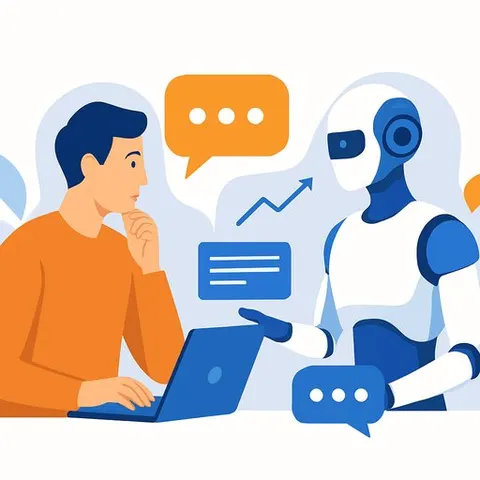
AI Now Handles First Drafts. Humans Must Finish The Story.
AI has moved from novelty to default in communications work. Press releases, social copy, campaign concepts, and video scripts now arrive in minutes rather than hours. The shift is real and accelerating across 2026.
But speed alone doesn't win. The communications teams pulling ahead are those treating AI as a starting point, not an endpoint.
The New Workflow: AI Drafts, Humans Decide
A product launch that once meant late nights and panic now means feeding a rough brief into AI and receiving 70 percent of the work done before anyone opens a document. The output isn't perfect, but it's workable.
This is the new operating baseline. Communicators who don't use AI for initial drafts are already falling behind on speed.
The constraint is real, though. AI can write. It cannot judge what matters, what rings true, or when to break convention. Those decisions still require human oversight.
One organisation learned this when fully automated channels triggered a measurable drop in trust and loyalty. The content was technically sound. It felt invasive.
Personalisation At Scale, Without Crossing The Line
Algorithmic workflows now adapt messaging by geography, platform, and user behaviour in real time. LinkedIn copy reshapes itself for Instagram. Timing shifts based on what actually converts.
This precision matters. Generic messaging costs engagement.
The risk is obvious. Personalisation that feels tailored reads as surveillance. Knowing where that line sits requires judgment that algorithms don't have.
The working rule: Use AI for scale and speed. Reserve humans for meaning and trust.
Real-Time Alerts Beat Crisis Response
AI now flags reputation risks as they emerge. A customer complaint gaining traction at 2 am gets flagged, summarised, and routed to humans with suggested responses by morning. Early intervention prevents escalation.
This is where machine speed genuinely solves a human problem. The alert system works only when humans are in the loop to make the call.
Black-box automation increases risk. Human oversight combined with machine speed does the opposite.
Critical Thinking Became More Valuable, Not Less
AI raises the cost of lazy thinking. When everyone can generate competent copy in seconds, differentiation comes from ideas that matter.
One campaign started as a concept the team almost dismissed. Human insight saw potential. The result was bold enough to be widely shared. AI alone would have missed it.
The premium skills in 2026 are the ones machines still can't replicate: critical thinking, creativity, empathy, and cultural fluency. Reading a room. Knowing when to break the rules. Understanding what resonates with actual people.
The Practical Path Forward
Test AI through pilots, not hype. Build skills as fast as you adopt tools. Design workflows that can adapt as the technology changes.
Stay transparent about what AI is doing and why. People trust competence more than they trust efficiency.
AI brings scale. Humans bring connection. The communicators winning in 2026 are leading the combination, not competing against it.
Learn more about AI for Marketing and AI for PR & Communications.