
AI news ·
AI reshapes recruitment but executive search firms remain vital for C-suite hiring
AI is handling pre-screening and sourcing for junior roles in Singapore, but executive search firms still dominate C-suite hiring. Human judgment on leadership dynamics and company politics remains beyond what AI can replicate.
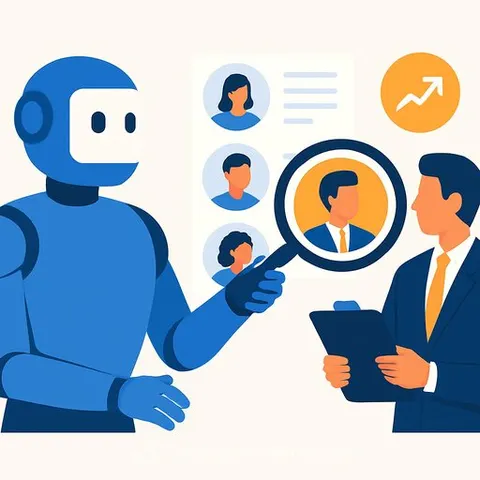
Executive Search Firms Hold Ground as AI Reshapes Hiring
Artificial intelligence is automating much of the recruitment work in Singapore, but organisations continue to rely on executive search firms for senior leadership roles. The division is clear: AI handles the groundwork for mid-level and junior positions. Human expertise remains essential for C-suite appointments.
Around seven in 10 recruiters in Singapore plan to increase their use of AI for pre-screening interviews in 2026, according to LinkedIn Singapore. A similar proportion expect AI to play a larger role in sourcing candidates.
AI can identify "hidden-gem candidates" whose skills might otherwise be overlooked, said Ruchee Anand, vice-president of LinkedIn talent solutions for Asia-Pacific. The technology automates repetitive tasks, allowing recruiters to review 81 per cent fewer profiles and save an average of 1.5 hours per role.
Banks Lead AI Adoption in Recruitment
Financial institutions are among the first to integrate AI into hiring. UOB uses AI to improve sourcing efficiency, allowing talent acquisition teams to identify and engage candidates more directly. DBS employs generative AI to analyse and match candidates' skills, experience and potential against role requirements.
The shift has pressured traditional HR consultancies that recruit across a wide range of roles. Prospect Resourcing, an international talent consultancy focused on PR and communications, recently closed its recruitment services division in Asia, citing changes in regional hiring practices. Many organisations now hire directly using online platforms and AI-driven tools.
Why Executive Search Remains Critical
Executive search firms occupy a different space. They specialise in senior leadership and C-suite appointments, and organisations continue to engage them for critical hires. These firms provide access to networks and candidates that direct sourcing cannot reach.
Shalynn Ler, managing director at Sydney executive search firm Ethos BeathChapman, said that executive search goes beyond matching credentials. It requires understanding leadership dynamics, company politics, business needs, succession plans and how an organisation functions. These insights come from years of experience, connections and market knowledge that AI cannot easily replicate.
Ethos BeathChapman placed over 400 executives in 2025 across legal, banking and finance, insurance and technology sectors.
Human Judgment Remains Irreplaceable
For senior searches, the question is whether a candidate can lead the organisation forward and guide it through growth or transformation. "AI can handle much of the groundwork. But judgment still sits with people," Ler said.
Leadership advisory firm Heidrick & Struggles confirmed this view. Wu Jiat-Hui, partner-in-charge of its Singapore office, said clients engage executive search firms for industry knowledge, networks of senior leaders and an "outside-in perspective" on what top talent looks like in the market.
As AI reduces manual work and streamlines candidate sourcing, the relationship-driven work of executive search firms remains crucial in securing top leadership talent in Singapore.
For HR professionals managing recruitment strategy, understanding where AI adds value and where human judgment is essential will shape hiring decisions in 2026. Learn more about AI for Human Resources or explore the AI Learning Path for CHROs to develop your organisation's AI recruitment strategy.