
AI news ·
AI scribes spread to a third of physician practices as doctors look to cut paperwork
About 30% of physician practices now use AI scribes that listen during appointments and auto-generate visit notes. Patients should know the tools can make errors, and their data may be used to improve the software.
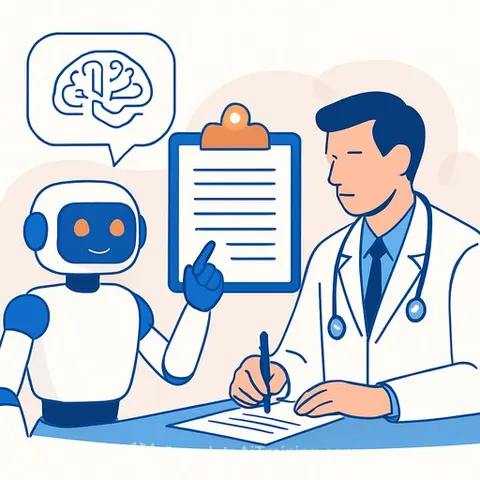
Nearly a Third of Physician Practices Now Use AI Scribes to Cut Administrative Work
Physician practices are adopting AI for Healthcare tools at a rapid pace, with roughly 30% already using AI scribes to reduce the time doctors spend on paperwork rather than patient care.
The technology works straightforwardly: an AI notetaker listens during patient visits and automatically generates a visit summary within seconds after the appointment ends. The tool handles note-taking and charting, freeing clinicians to focus on face-to-face interaction.
Eric Boose, a family physician at Cleveland Clinic, has used an AI scribe for about two years. "I can really just sit there and engage and just focus on them and listen," he said. The system lets him leave work earlier and spend more time with family.
Three Things Patients Should Know
Doctors Should Ask Permission
Your clinician should request consent before turning on an AI scribe, typically through a verbal question like, "Are you OK if I use an AI scribe to help me take notes?" Legal requirements for recording patient conversations vary by state.
You can ask your doctor to pause the recording at any time, especially when discussing sensitive topics. If you decline, your practitioner will return to manual note-taking.
AI Scribes Make Mistakes
These tools can "hallucinate"-adding errors to records spontaneously. They may also omit important information or miss context from conversations.
Clinicians are required to review and edit AI-generated summaries before adding them to your medical record. As a patient, carefully review your visit summary and contact your provider if you spot errors.
Your Data May Be Used to Improve the Software
AI scribe companies and health systems have access to your medical data and must follow federal standards under the Health Insurance Portability and Accountability Act (HIPAA) for how they use and store it.
Companies may use appointment data to improve their software without informing you. If information is "de-identified"-stripped of personal identifiers so it cannot be traced back to you-it faces fewer regulatory restrictions and can be used more broadly.
Ask your practitioner or health system how your data is being used. Be aware that you may not receive a complete answer.
Federal Support for Health Care AI Is Strengthening
The Trump administration strongly supports AI development in health care. In early 2025, President Donald Trump issued an executive order reducing existing regulations on AI to help the U.S. maintain global leadership in the field.
The U.S. Department of Health and Human Services released an AI strategy in December supporting "integrating AI to modernize care and public health infrastructure to improve health at the individual and population levels."
These policy shifts suggest AI tools like Speech-To-Text systems will continue expanding through the health care system in the coming years.