
AI news ·
Healthcare organizations weigh agentic AI adoption with help from strategic workshops
70% of healthcare organizations now actively use AI, up from 63% last year, with nearly half exploring AI agents for scheduling and admin tasks. Adoption remains the main barrier-tools must fit existing workflows or staff won't use them.
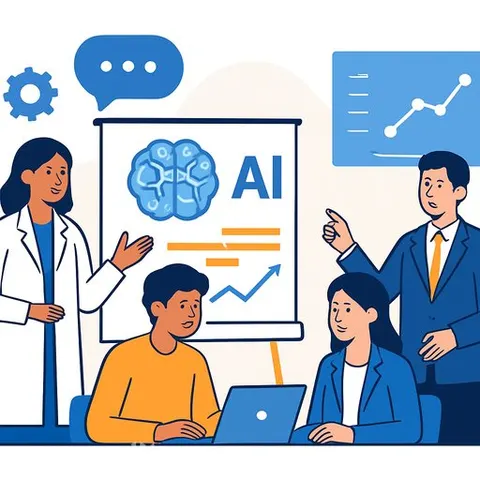
Healthcare Organizations Turn to AI Agents for Administrative Work
Healthcare IT leaders are moving beyond experimentation with agentic AI. At the HIMSS Global Health Conference in Las Vegas earlier this year, providers discussed where AI agents can handle operational and administrative tasks that currently consume staff time.
According to NVIDIA's second annual State of AI in Healthcare and Life Sciences report, 70% of healthcare organizations are actively using AI, up from 63% in 2024. Nearly half-47%-reported using or assessing agentic AI specifically.
The interest is clear. Healthcare organizations face slim margins, workforce shortages, and process inefficiencies. AI agents are already supporting patient contact centers with appointment scheduling and health screenings, freeing staff for higher-priority work.
Adoption Remains the Real Challenge
Despite growing interest, many healthcare organizations hesitate. Tool sprawl and workflow integration problems create friction. Craig Anderson, vice president and corporate innovation officer at BayCare Health System, said the biggest barrier to any new technology is adoption itself.
"If they don't use it, you'll never find the value," Anderson said during a HIMSS session. "You've got to match that solution with the workflow."
Many providers wait to see how peers implement agentic AI before committing their own resources. They want proof that use cases work in healthcare settings before investing time and budget.
A Structured Approach Reduces Risk
Healthcare organizations without dedicated AI teams or large budgets can still move forward. Working with a strategic partner provides technical expertise and ensures compliance and security considerations are built in from the start.
One structured approach involves a workshop that moves organizations from brainstorming to a concrete roadmap. The process starts with use case ideation and prioritization, then validates ROI before rollout.
"You're not teaching a tool; you're teaching a new way to solve an old problem," said Jason Clishe, a field solution architect who discussed the workshop approach at Google Cloud Next 2026. "What you're really doing is creating new business processes from the beginning."
Where Agentic AI Works in Healthcare Today
Current implementations focus on back-office and administrative functions. Patient self-service-scheduling appointments, answering routine questions, initial health screenings-frees clinical staff for direct care.
As the technology matures, healthcare organizations expect AI agents to support virtual care and remote patient monitoring, creating a more connected continuum of care.
For healthcare teams exploring AI for Healthcare or AI Agents & Automation, the path forward involves identifying workflows where automation reduces rote work without disrupting clinical operations.