
AI news ·
Opalite Health builds AI medical interpreter targeting 25 million limited-English-proficiency Americans
25 million Americans with limited English proficiency often wait 30+ minutes for a hospital interpreter. Opalite Health's AI medical interpreter handles 150+ languages, cuts costs in half, and flags uncertain translations for human review.
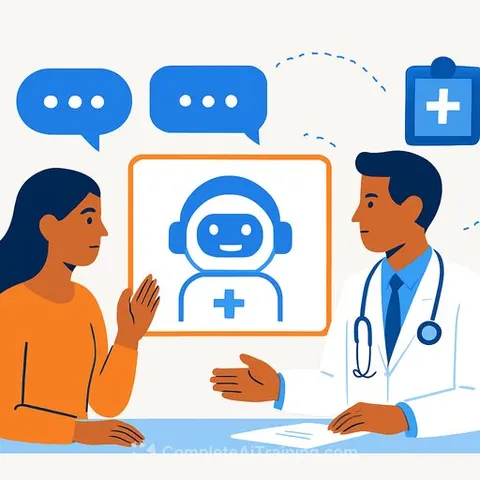
AI Medical Interpreter Tackles a 25-Million-Person Problem
Twenty-five million Americans have limited English proficiency. When they arrive at an emergency room with chest pain, they often wait 30 minutes for a Spanish interpreter while their physician spends another 20 minutes trying to reach a telephone service.
Language barriers in healthcare correlate directly with diagnostic errors, medication mistakes, and adverse outcomes. The Joint Commission has documented this connection for two decades. Yet hospitals still pay $2-5 per minute for human medical interpreters - a $4 billion industry designed to be slow, expensive, and unavailable at 3am.
Opalite Health is building an alternative. The company's AI-powered speech-to-speech medical interpreter operates in 150+ languages, integrates directly into existing electronic health records, and costs less than half what hospitals currently spend on interpretation services.
How It Works in Practice
A provider initiates a session from any device, including the EHR already open on their screen. Within seconds, they communicate directly with a non-English-speaking patient in their native language. No hold times. No separate device. No human intermediary for routine conversations.
The system auto-generates charting notes from each session, saving providers an average of 20% per visit on administrative time. Opalite is already live in 10+ states with daily clinical use - not pilot programs, but production deployments in hospitals and community health centers.
The technical pipeline has four layers:
- Medical ASR (Automatic Speech Recognition): Tuned on clinical corpora to recognize drug names, anatomical terms, and procedure codes correctly. General-purpose models mangle "metformin" into "met forming." Opalite's layer doesn't.
- Medical NMT (Neural Machine Translation): A domain-specific model that handles clinical meaning, code-switching between languages, and knows when to flag uncertainty rather than guess. A translation error in a medication dosage is a patient safety event.
- Real-Time TTS (Text-to-Speech): Synthesizes translated text back to speech in the patient's language with latency under three seconds. Must work in 150+ languages, including tonal languages where pitch carries meaning.
- Opalite Guardian: Runs in parallel, monitoring confidence across each segment. If the system detects uncertainty, it escalates to a certified bilingual medical professional for real-time review. This layer is what enables Opalite's claim of more than 90% fewer errors than certified medical interpreters.
The Team Behind It
Cathleen Kuo, the CEO, is a physician with an MD from University at Buffalo. She co-founded a prior medical AI venture and has 200+ publications. Her parents experienced language barriers in healthcare from both sides of the stethoscope. This is not a tech person cosplaying a healthcare founder.
Alex Mehregan, the CTO, is a Berkeley EECS graduate who worked at Apple on Apple Intelligence and the Siri rewrite. He spent years shipping production speech AI at scale to hundreds of millions of devices.
The pairing matters. Cathleen opens doors in hospitals because she speaks clinical language. Alex builds the pipeline. Neither is faking expertise.
The Business Case
Hospitals currently spend $1-2 million per year on interpretation. Opalite costs less than half that, with a certified interpreter on screen in under 30 seconds instead of a 25-minute wait.
Section 1557 of the Affordable Care Act mandates meaningful access for limited-English-proficiency patients at all federally funded healthcare organizations. That's not optional - it's compliance. Opalite's addressable market is essentially every federally funded healthcare facility in the country.
Customers include hospitals, Federally Qualified Health Centers, home health organizations, telehealth providers, and clinics.
What's Hard to Copy
The surface architecture is replicable. Someone could wire together Whisper, GPT-4o, and an off-the-shelf text-to-speech service in a weekend and have a working demo in a quiet room.
What takes years: validated accuracy studies from real clinical deployments, EHR integration agreements with production hospitals, HIPAA and SOC 2 Type II certifications, and the Guardian quality monitoring system calibrated on actual clinical feedback.
Regulatory compliance alone creates a 6-18 month barrier before a new entrant can book a procurement meeting. This is not a technical barrier - it's a time-and-process barrier, equally effective at slowing competition.
The real moat is the data flywheel. Every interpreted conversation Opalite processes is training signal, with human review feedback built in at the Guardian layer. Over time, their medical ASR and translation models improve specifically on clinical conversations in the exact languages their customers use most. A competitor starting with general-purpose models has to climb this curve from scratch.
Founder credentials are a structural distribution advantage. A hospital CMO returning a call from a physician-researcher with 200+ publications is not something money can replicate quickly.
What Matters Next
Opalite's claim of more than 90% fewer errors than certified medical interpreters is significant. If their validation methodology holds up to scrutiny - and with a physician CEO, it probably does - that's a publishable clinical result. Published evidence in peer-reviewed journals is a moat that takes years to build. Most startups never bother.
For a two-person team with $500K, this is a strong position. The real question is whether they can scale sales fast enough to establish the network density - patient volume, language coverage, hospital contracts - that makes the flywheel self-reinforcing before a better-capitalized competitor enters the market.
Language barriers in healthcare kill people. Opalite is early, credible, and well-positioned to address a problem that affects millions of Americans every year.
For more on AI for Healthcare and Speech-To-Text applications, explore how these technologies are reshaping clinical practice.