The Future Of HR: How AI Turns Engagement Into Empowerment
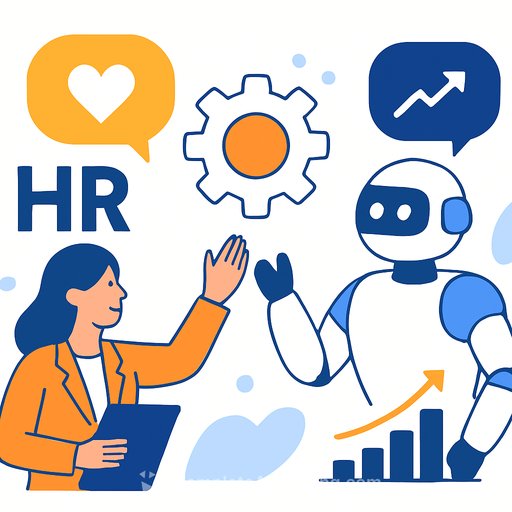
Engagement scores tell you how people feel in a moment. Empowerment gives them the clarity, skills, and support to do the best work of their career. AI helps HR make that shift-from collecting feedback to creating momentum. CHROs can explore the AI Learning Path for CHROs for leadership-focused guidance on workforce analytics and AI-enabled talent strategy.
The goal isn't bigger dashboards. It's better decisions, faster growth for employees, and fewer blockers in the day-to-day.
What Changes With AI
- From surveys to signals: Continuous listening across chats, tickets, and workflows-summarized ethically-to spot friction early.
- From programs to personalization: Learning, career paths, and benefits that adapt to each person's skills and goals.
- From policy to practice: Manager copilots that draft feedback, 1:1 agendas, and recognition in seconds.
- From guesswork to fairness: Bias checks, explainable recommendations, and consistent decision trails.
High-Impact Use Cases You Can Deploy Now
People Analytics & Listening
Use AI to summarize sentiment, themes, and hotspots across pulse surveys and support tickets. Focus on privacy by default: minimize data, aggregate results, and allow opt-outs.
Pair insights with playbooks: if workload spikes, rebalance assignments; if clarity drops, improve goal-setting. Small fixes, applied quickly, beat quarterly retrospectives.
Learning & Development
Infer skills from real work-projects, code, sales calls, or case resolutions-and auto-recommend learning paths. Replace generic courses with short, role-specific practice and AI coaching.
Measure time-to-proficiency by role. Tie content to business outcomes instead of completions.
Talent Retention & Internal Mobility
Match people to gigs, mentors, and roles based on skills, location, and growth goals. Flag burnout and attrition risks using clear, explainable signals-workload, schedule irregularity, stalled progression.
Act on it: re-scope work, rotate projects, or open a clear growth path. Mobility beats replacement cost every time.
HR Service & Employee Experience
Deploy an AI assistant that answers policy questions, drafts requests, and routes complex cases. Support multiple languages and accessibility from day one.
Track deflection, response time, and satisfaction. Use the patterns to fix root causes-confusing policies, clunky tools, or unclear ownership.
Guardrails You Need
- Consent and context: Tell people what's collected, why, and how it helps them.
- Data minimization: Keep only what's needed. Retain less, encrypt more.
- Fairness checks: Test for adverse impact by group before launch and monthly after.
- Explainability: Provide simple "why" behind recommendations.
- Human-in-the-loop: Keep managers and HR accountable for final decisions.
- Policy alignment: Document usage, access, and escalation paths.
Helpful references: the NIST AI Risk Management Framework and the EEOC guidance on AI in employment.
90-Day Blueprint
- Weeks 1-2: Pick two use cases tied to real pain (e.g., new-hire ramp, internal mobility). Map data sources and owners.
- Weeks 3-4: Shortlist vendors or build options. Run security and privacy checks. Define success metrics upfront.
- Weeks 5-8: Launch a pilot to a narrow audience. Train managers. Collect qualitative feedback weekly.
- Weeks 9-12: Compare outcomes vs. baseline. Keep what worked, cut what didn't. Prepare a phased rollout.
Metrics That Prove Empowerment
- Growth: Time-to-proficiency, internal mobility rate, skills gained per employee.
- Experience: eNPS by team, first-response time for HR support, case resolution rate.
- Manager quality: Frequency and quality of 1:1s, feedback timeliness.
- Fairness: Adverse impact ratio, variance in promotion rates by group, explanation coverage.
- Adoption: Active users, task completion via assistants, deflection rate.
- Outcomes: Attrition in key roles, hiring from within, productivity signals by team.
Build The Right Stack
Favor tools that integrate with your HRIS, LMS, ATS, and collaboration suite. Ask for APIs, data export, and admin-level controls.
- Where you need accuracy and audit trails, use smaller, focused models or vendor-validated workflows.
- Where creativity and speed matter, allow flexible AI assistants with clear data boundaries.
- Pilot before contracts. Verify claims with your data, not demos.
Upskill The HR Team
HR doesn't need data scientists to start. You need prompt patterns, ethics basics, and practical analytics.
- Teach managers how to review AI suggestions and add context.
- Standardize prompts for feedback, coaching, and goal reviews.
- Make fairness checks part of BAU, not an annual event.
If you're setting up role-based learning paths for HR and L&D, explore the AI Learning Path for Training & Development Managers to speed up internal readiness.
From Scores To Momentum
Engagement tells you where you are. Empowerment gets people where they want to go. Use AI to remove friction, personalize growth, and support better decisions-consistently.
Start small, measure clearly, and keep people at the center. That's how HR turns intent into impact.
Your membership also unlocks: