
AI news ·
AI tool converts disaster news into structured knowledge graphs covering 3,000 events across 175 countries
EU researchers built an AI system that scanned 3,000+ disaster events across 175 countries, turning news articles into structured data showing cause-and-effect chains. The dataset covers 2014-2024 and is publicly available.
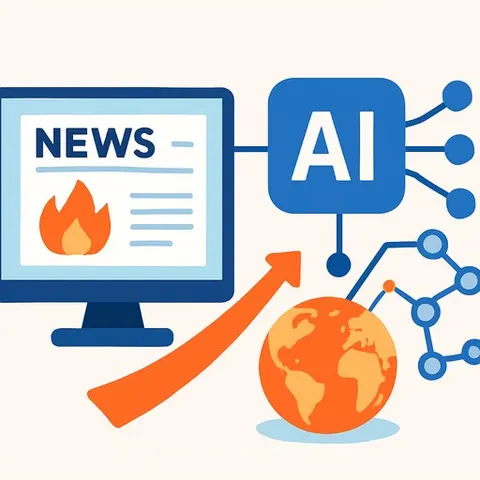
AI System Converts Scattered Disaster News Into Structured Data for Emergency Response
Researchers at the European Commission's Joint Research Centre have built an AI pipeline that reads news coverage of disasters and converts it into structured knowledge that scientists, policymakers, and emergency responders can act on immediately.
The system analyzed over 3,000 disaster events across 175 countries between 2014 and 2024, covering 26 types of disasters and accounting for roughly 80% of global economic losses recorded during that period. The dataset and an interactive dashboard are publicly available.
How the system works
The pipeline operates in two stages. First, AI models scan millions of articles from the Europe Media Monitor-a service tracking hundreds of thousands of news sources worldwide-to identify disaster coverage. Then, large language models running on the Commission's own AI infrastructure distill each event into a structured summary: what happened, who was affected, what caused it, and how it was managed.
These summaries are converted into visual networks showing cause-and-effect relationships between hazards, vulnerabilities, and responses. This adds context and narrative detail that traditional databases typically lack.
Capturing cascading effects
The system's most useful feature is its ability to track cascading events. Heavy rainfall doesn't just cause flooding-it can disrupt transport networks, damage crops, and trigger disease outbreaks. Traditional databases record each impact separately.
The knowledge graphs show the full chain of effects. Emergency planners can use this information to anticipate knock-on effects, allocate resources more strategically, and learn from how past crises unfolded.
Addressing reporting gaps
Most disaster reporting focuses on high-income countries and sudden events. Slower crises like droughts in vulnerable regions remain largely invisible in news databases. This system drew on a broader, more systematic news feed to correct that imbalance.
The same approach can be applied to other datasets, making it possible to build a more complete picture of risk in underrepresented regions.
Validation and next steps
The results were validated at a workshop in Brussels in June 2025 with disaster risk professionals from the Commission's civil protection and humanitarian aid divisions. They confirmed the system's accuracy and practical relevance.
The study was conducted in cooperation with Engineering Ingegneria Informatica and the Institute of Health and Society at the University of Louvain. All compiled data, code, and processing workflows are openly available.
Professionals working with disaster data or emergency response systems may find value in exploring AI Data Analysis Courses to understand how these tools extract and structure information from unstructured sources.