
AI news ·
AI tools give managers time back for the work that got them promoted
VPs promoted for their technical or commercial craft often spend most of their week on coordination instead. AI tools are starting to reclaim that time-but only for managers who use it deliberately.
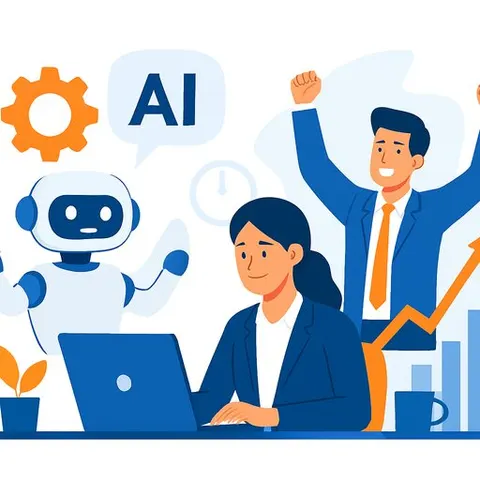
The Work VPs Actually Want Back
Ask a vice president what they'd miss most about their old job and most will say the same thing: the work itself. Not the strategy decks or headcount planning. The architecture decisions. The hard problems. The thing that made them good enough to get promoted in the first place.
Management creates a quiet irony. The people who rise to lead technical or commercial teams usually do so because they're exceptional at the craft. Then the job slowly replaces that craft with coordination - and the organization loses the thing it most wanted to keep.
The coordination trap
A VP's week typically divides into three distinct modes: staying close enough to the craft to make good decisions and earn team respect, coaching and developing people around them, and driving execution to ensure decisions actually get implemented.
Most VPs are only doing one of those well. Not because they lack capability. Because the other two-thirds of their week is already gone.
Commitments made in meetings go untracked. Ownership gets assumed rather than assigned. Things that should have closed resurface weeks later, slightly reworded, in the next review. The coordination layer expands to fill whatever time is available - and the craft, coaching, and execution all get squeezed.
"A lot of your time as a manager is spent as a post box," says Huw Slater, founder of readywhen, a tool that captures to-dos from meetings, messages and comments. "You get a query from an employee and you've got to go to another team to find out the answer. At least a third of the tasks a manager does can be done by AI. If anyone's job changes by a third, the whole job changes."
Where AI changes the equation
The freed-up time has to be treated as a discipline, not a side effect. The VPs who reclaim it go back to the architecture decisions that determine what the company can ship or the customer conversations that decide renewals. The ones who don't drift into being a different kind of post box - between AI agents this time, rather than between teams.
Leah Sutton, chief portfolio talent officer at Balderton Capital, sees the same pattern across her portfolio companies. "The skills that matter in management haven't changed - curiosity, communication, the ability to build trust," she says. "What's changing is how much time managers actually have to use them."
There's a wrong way to implement this shift, and it shows up early. "My fear would be if work becomes just sitting at your computer going back and forth between agents," says Lenke Taylor, chief people officer at Personio. "That's going to create environments where employees are much more likely to burn out and be less productive over time."
The widening gap
Not every company is moving at the same pace. Most organizations in the world are not AI-native, and there's still a learning curve ahead.
For the VPs who figure out how to use this time well, the shift is less about technology than about reclaiming something they thought the job had taken from them for good.
"The point isn't efficiency," Slater says. "It's that the people who are genuinely great at their jobs should be spending their time on the things only they can do."
Learn more about how to approach AI for Management roles and strategies for reclaiming high-value work.