
AI news ·
AI tools improve supplier discovery, risk management and contract efficiency in vendor procurement
Only 4% of procurement teams use AI at scale, despite 64% of leaders expecting it to reshape their roles within five years. Machine learning and NLP can cut sourcing time, flag supply risks early, and speed up contract review.
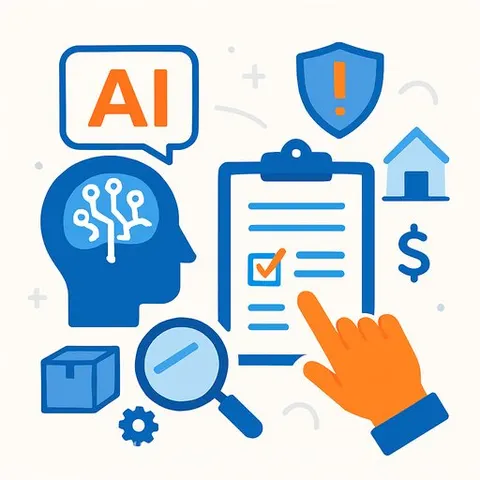
Five Ways AI Can Improve Vendor Procurement
Only 4% of procurement teams have adopted AI at scale, yet 64% of procurement leaders expect the technology to transform their roles within five years. The gap between expectation and adoption suggests most organizations haven't yet figured out where to start.
Machine learning and natural language processing can reduce costs, improve efficiency, mitigate supply chain risks, and secure better contract terms. Here's how procurement managers can apply these capabilities.
Intelligent Supplier Discovery
AI can automate the vendor identification and vetting process by analyzing financial filings, news reports, and internal records to surface specialized suppliers that match specific business needs. This cuts sourcing time significantly.
Instead of manually evaluating RFx responses, procurement teams can use AI to rank vendors based on historical performance, credit health, and ESG credentials. The result is faster shortlisting with less human intervention.
Predictive Risk Management
AI shifts procurement from reactive problem-solving to continuous risk monitoring. The technology scans news, financial reports, and web data to flag disruptions-supplier bankruptcy, natural disasters, geopolitical events-before they affect operations.
AI mapping tools also reveal hidden dependencies beyond direct suppliers. They can identify when multiple vendors rely on the same distressed sub-tier manufacturer, exposing concentration risks that human analysis might miss.
Home Depot uses Google's cloud-based AI tools, including machine learning and computer vision, to enhance inventory management and reduce supply chain disruptions.
Autonomous Contract Management
Natural language processing reads, summarizes, and extracts key contract terms-renewal dates, liabilities, payment conditions-in minutes rather than hours. Legal review time drops substantially.
AI flags deviations from standard policies during negotiations and monitors for contract leakage, helping ensure all parties follow agreed terms and reducing compliance violations.
Cost Optimization
AI analyzes historical transaction data and market pricing to provide real-time benchmarks. Procurement managers get a clearer picture of fair pricing before negotiations, strengthening their position with vendors.
Some organizations now deploy AI assistants to handle negotiations with smaller suppliers autonomously, securing better discounts and payment terms while freeing employees for higher-value work.
Demand Forecasting
Machine learning models analyze historical data, market signals, and social media trends to improve demand predictions. Better forecasting means inventory levels stay balanced-avoiding both excess stock and costly rush orders.
Accurate demand planning also helps procurement teams negotiate contracts that actually match business needs, rather than over-committing or under-ordering.
The Adoption Gap
The technology works. The challenge is getting teams to implement it. Procurement professionals interested in building these skills should explore AI training paths designed specifically for procurement specialists, which cover the tools and automation techniques transforming the field.
For managers overseeing procurement, understanding AI applications in management provides context for evaluating which use cases matter most to your organization.
As supply chain disruptions become more frequent, the organizations that adopt AI procurement tools will have a measurable advantage in cost control and operational stability.