
AI news ·
AI tools move from experimental to embedded in independent insurance agencies
AI tools for independent insurance agents have moved past the experimental stage and are now embedded in the platforms agencies already use. Agents are reclaiming hours lost to admin work, handling more accounts, and responding to clients faster.
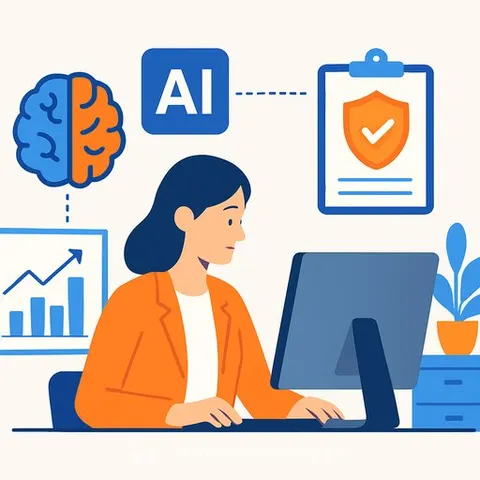
AI Is Moving From Theory to Operations in Insurance Agencies
Independent insurance agents face mounting pressure. Client expectations are rising, renewals grow more complex, and administrative work expands faster than headcount can absorb it. The result: accounts go uncross-sold, renewals slip to competitors, and agencies hit a wall when trying to scale without hiring more people.
Artificial intelligence is changing that equation. AI tools for insurance agents are no longer experimental-they're operational, embedded in platforms agencies already use, and measurable in the workflows that consume the most time.
Where AI Is Working in Agencies Now
The agencies making the most progress aren't building custom AI platforms from scratch. They're finding AI capabilities already embedded in the systems they use every day.
The pattern is clear: the best AI for insurance agents lives inside existing workflows, not as a separate tool that requires new processes. AI handles the tasks that are repetitive, data-intensive, and time-consuming-reading and summarizing documents, processing claims data, extracting information from unstructured inputs, and identifying patterns across account data.
These are tasks that consume agent time without requiring the experience or client relationships that make human agents valuable.
Will AI Replace Insurance Agents?
No.
AI cannot replicate the trust policyholders place in their agent. It cannot match the judgment that comes from years of placing commercial risk or the relationships that drive long-term retention. Those things aren't disappearing-they're becoming more important as the insurance industry grows more complex.
Agencies seeing the best results from AI treat it as a way to free their people to do what only people can do: build client relationships, grow the book, and deliver service that earns long-term loyalty.
The Immediate Effect: Time
Independent agents who use AI Agents & Automation tools effectively reclaim hours each week from administrative overhead. They handle more accounts without adding staff, respond to clients faster, and spend more time in front of prospects rather than behind screens.
The Longer-Term Effect: Competitive Positioning
Agencies that build AI into their workflows now will have a structural advantage as client expectations shift. Clients increasingly expect real-time responses, proactive coverage advice, and digital-first service options. AI is what makes it possible to meet those expectations at scale without burning out the team.
Three Principles That Separate AI That Works From AI That Disappoints
Vertical specificity
AI trained on insurance-specific data and workflows. Generic AI tools built for horizontal use cases weren't trained on insurance data, don't understand policy structures, and aren't embedded in the systems where your workflows function. Using AI that wasn't designed for insurance often means more manual correction, not less.
Embedded workflow integration
AI capability that lives inside your AMS, not in a separate tool that requires copying data between systems. AI that lives outside your core systems adds friction and creates data-quality risks.
Human-in-the-loop design
AI that augments agent judgment rather than replacing it. The best AI for Insurance surfaces recommendations your team acts on-it doesn't make autonomous decisions without oversight.
The Agency That Uses AI Well Wins
The power of AI in insurance isn't just efficiency-it's competitive differentiation. The next generation of independent agencies won't be defined by carrier relationships or book size alone. It will be defined by the ability to serve more clients, more proactively, with the same or fewer resources, consistently, as the industry accelerates.