
AI news ·
AI tools offer teachers a path to closing persistent student learning gaps, author argues
UC San Diego found 12.5% of incoming freshmen couldn't do middle school math, despite a 3.7 GPA average. AI tools now help teachers spot specific gaps and act fast - pilots in the Bronx show real gains.
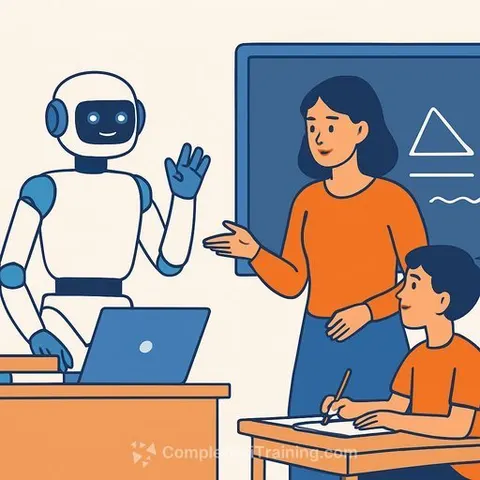
Schools Struggle to Help Students Catch Up. AI Offers a Path Forward
UC San Diego reported a troubling gap among incoming freshmen: 12.5% could not perform basic middle school math. The students looked successful on paper-94% had taken advanced courses like calculus, and their average GPA was 3.7. Yet they arrived unprepared for quantitative work.
The university pinpointed specific causes: COVID-19 disruptions, elimination of standardized testing, grade inflation, and expanded admissions from under-resourced high schools. But the underlying problem runs deeper.
The Catch-up Crisis
A 2023 study of nearly 3 million students across seven states found that students who started behind academically rarely closed the gap. Those in the 25th percentile in third grade typically remained in the bottom third through high school. Low-income students and Black and Hispanic students barely moved at all.
When a nonprofit examined 28,000 schools nationwide, only 5% helped the average student catch up to grade level. Kids who fall behind stay behind.
Why Teachers Can't Keep Up
Teachers face an impossible task. In a classroom of 25 to 30 students, they must identify who is on grade level, who is behind and why, how to modify instruction for each struggling child, and how to extend learning for advanced students-all while delivering grade-level content.
Diagnostic exams are infrequent and often misaligned with classroom instruction. Intervention programs are purchased but poorly implemented. Teachers lack the tools to diagnose and address specific learning gaps at scale.
Without solutions, grade inflation creeps in. Schools soften the message rather than tell parents their child is behind, because they cannot explain how they will help.
Where AI Can Fill the Gap
Before AI, solving this at scale was nearly impossible. Students generate enormous amounts of work daily-assignments, quizzes, writing, projects. No teacher can analyze all of it for 25 students every day. AI can surface patterns quickly and provide usable insights.
Consider a fifth grader struggling with fractions. A teacher knows he earned a C- on the test but not why. AI can analyze his work in real time, discover that he inverts numerators and denominators, draw on data from thousands of similar students to identify what worked best for those with the same misconception, and recommend a 15-minute tutoring block. The teacher reviews and revises before using it.
The same applies to coaching. High-quality feedback for teachers is rare because it is time-intensive and expensive. AI-supported coaching tools could provide timely, standards-aligned feedback on recorded lessons, supplementing human coaching rather than replacing it.
Real Results in the Bronx
In the Bronx, superintendents have launched pilots using AI to help students catch up in math. They partner with organizations such as Teaching Lab, Achievement Network, and Kiddom that provide assessment and recommendation tools for teachers. The pilots include high-quality professional coaching for staff.
Schools using these programs are seeing significant academic progress and increased student engagement.
Setting a Goal
Evidence shows the problem is reversible. TNTP identified 1,400 schools where students consistently learned more than a year's worth of material annually, allowing those who started behind to reach grade level.
The goal should be clear: students who fall behind grade level will catch up to or exceed grade-level standards within two school years, and without fail by high school graduation. State education leaders should adopt this goal publicly and report annually on how many students are behind, how many are catching up, and how many are on track.
No technology should enter classrooms without strict vetting for data privacy, security, and appropriate screen time limits. But smart, safe tools show real potential to give teachers the insights and strategies they need to help students succeed.
Learn more about AI for Education and explore an AI Learning Path for Teachers designed to help educators implement these tools effectively.