
AI news ·
AI tools push companies to replace fixed org charts with adaptive team structures
Companies are replacing fixed org charts with fluid, project-based teams that form and dissolve around specific goals. AI maps employee skills in real time, helping leaders build teams based on capability rather than job title.
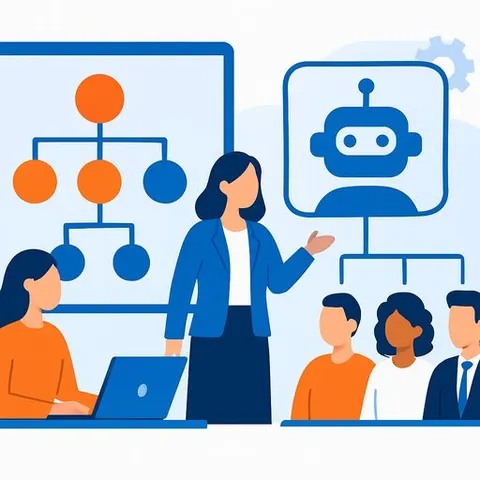
Static Org Charts Are Becoming Obsolete. Here's What's Replacing Them
Organizations are dismantling rigid hierarchies in favor of structures that form and reform based on real-time business needs. The shift reflects a fundamental mismatch between how companies are designed and how modern markets actually operate.
Traditional org charts promised clarity: fixed roles, defined reporting lines, predictable career paths. They worked when markets moved slowly. They don't work now.
Why Traditional Structures Are Breaking Down
Rigid hierarchies create bottlenecks. Critical decisions funnel through a small group of approvers, slowing response times when speed matters. Fixed reporting lines mean teams wait for sign-offs instead of acting.
Functional silos prevent collaboration. Marketing, sales, operations, and finance each run their own show with separate goals and communication barriers. Cross-functional initiatives require navigating complex approval chains.
Static roles misallocate talent. An employee with valuable skills stays confined to their job description while other parts of the organization lack capacity. Skills go unused because people are locked into positions, not deployed where they create the most value.
Traditional structures lack visibility. Information spreads across departments. Teams work with incomplete knowledge of what others are doing, creating duplicate effort and missed opportunities.
Organizations that need to pivot quickly-responding to competitive threats, launching new products, adapting to customer demands-find themselves hamstrung by structures designed for stability, not change.
How Dynamic Structures Work Differently
Dynamic organizational structures abandon fixed hierarchies for systems that continuously adapt. Teams form around projects or objectives, not departments. When work finishes, the team dissolves and people move to new initiatives.
Skills matter more than titles. Instead of asking "Who owns this function?" leaders ask "Who has the right skills for this challenge?" Organizations use internal talent marketplaces or AI systems to map capabilities across the company and deploy people where they add the most value.
Decision-making spreads throughout the organization. Teams make choices within defined parameters, removing bottlenecks and enabling faster action. This requires trust and empowerment rather than direct oversight.
Feedback loops run continuously. Rather than annual reviews, organizations measure performance in real time, identify problems immediately, and adjust course. This keeps teams aligned with shifting priorities.
Digital collaboration platforms provide the infrastructure. They coordinate work across distributed teams, make progress visible, and ensure everyone has access to the same information.
Artificial Intelligence as the Engine
AI makes dynamic structures possible. It analyzes workforce data to map employee skills, capabilities, and performance patterns. This creates a complete view of who can do what.
AI recommends optimal team compositions for specific projects. It examines skill sets, past performance, and collaboration patterns to suggest the right mix of people. Teams aren't just capable-they're balanced.
Real-time decision support comes from AI analyzing project performance, resource usage, and market trends. It flags when teams need reconfiguration or when workflows need adjustment. Predictive modeling identifies potential challenges before they emerge, allowing organizations to adapt proactively.
AI automates coordination work. It tracks tasks, manages handoffs, and ensures workflows move without delays. Managers focus on strategy instead of administrative overhead.
The system continuously improves. AI identifies which team configurations produce better results and recommends similar setups for future projects. As conditions change, it suggests role and workflow adjustments to keep the organization focused on its goals.
The Tangible Benefits
Organizations that adopt dynamic structures move faster. They form teams quickly and respond to market changes without waiting for formal reorganizations.
Innovation increases. Removing walls between departments and bringing diverse perspectives together creates better solutions. Project-based teams allow rapid experimentation and refinement.
Talent utilization improves. Employees work on projects suited to their skills, maximizing productivity and satisfaction. Organizations tap a wider range of capabilities instead of leaving skills unused.
Productivity rises. Decentralized decision-making and real-time feedback eliminate bottlenecks. Work flows without delays waiting for approvals.
Employee engagement strengthens. People gain autonomy and work on varied projects instead of staying in one role. They see how their efforts directly affect the company, creating a sense of ownership.
The Obstacles Are Real
Cultural resistance runs deep. Employees and leaders accustomed to clear hierarchies find fluid roles and temporary teams unsettling. Distributed authority challenges leaders trained to command and control.
Leadership must shift from directing to facilitating. This requires new skills-coaching, collaboration, systems thinking. Leaders create conditions for success rather than making all decisions.
Coordination becomes more complex. Constantly changing teams and priorities require robust systems to prevent confusion, duplication, and misalignment. Digital platforms and standardized processes become critical.
Data quality matters enormously. Decisions on team formation and resource allocation depend on accurate, real-time information. Organizations lacking reliable data make poor decisions that undermine performance. Data governance-policies on usage, security, and privacy-becomes essential.
Accountability can blur. Traditional models define responsibility through job titles and reporting lines. Dynamic systems need clear decision rights, transparent goals, and new governance frameworks that maintain accountability without hierarchy.
Success Requires More Than Technology
Tools and AI enable dynamic structures, but they don't create them. Organizations need deliberate cultural shifts toward flexibility, trust, and experimentation. Leadership development matters. Governance frameworks matter. Process standardization matters.
The organizations that will win are those that address the cultural and strategic barriers alongside the technological ones. Technology opens the door. People and culture walk through it.
For HR leaders, this means rethinking how you hire, develop, and deploy talent. It means designing career paths that accommodate fluid roles. It means building systems that make skills visible across the organization. Learn more about AI for Human Resources to understand how technology can support these transitions, or explore AI for CHROs for insights into workforce analytics and talent management in dynamic environments.
What Comes Next
Future organizational structures will be network-based rather than hierarchical. Information flows freely. Collaboration crosses system boundaries. Centralized control gives way to distributed intelligence.
AI will automate team formation and task allocation. Systems examine skills, performance, and availability to determine optimal talent combinations. Organizations become more efficient and accurate in their operations.
Role fluidity will increase. Employees move between projects based on skills and interests rather than staying locked in fixed positions. Internal talent marketplaces make opportunities visible and encourage continuous learning.
Human-AI collaboration will define how work gets done. AI handles data analysis and routine tasks. People bring creativity, judgment, and empathy. Together they make better decisions and coordinate more effectively.
Organizations will stop periodic restructurings and instead evolve continuously. Based on real-time data and feedback, they adjust structures without disruptive overhauls. This keeps organizational design aligned with changing conditions.
The shift from static org charts to adaptive systems isn't a process change or a new tool. It's a fundamental rethinking of what organizations are. They're moving from machines designed to impose order toward living systems that learn and adapt. That transformation is already underway.