
AI news ·
AI tools write rigorous mathematical proofs from high-level sketches, researchers find
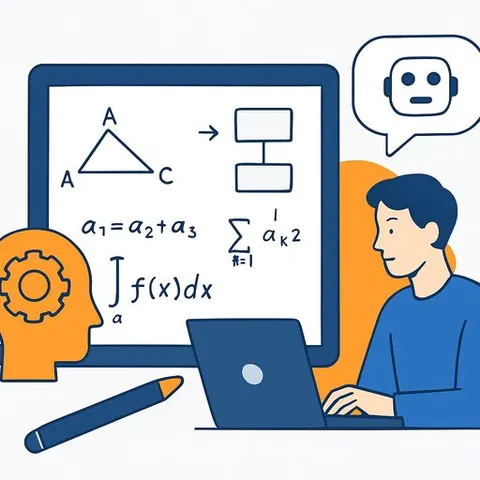
AI tools can now write full mathematical proofs from high-level sketches. A paper that typically takes months was recently completed in three weeks using agentic AI.
AI Tools Now Write Mathematical Proofs From High-Level Sketches
AI coding assistants have become standard in software engineering, with developers relying on them to write substantial portions of code. The same capability now extends to mathematical research. AI systems can develop and write rigorous mathematical proofs from nothing more than high-level proof sketches.
These proofs are written in formal mathematical languages-the same way code is written in Python or other programming languages. AI has become proficient in both kinds of languages and the logic underlying them.
Researchers recently completed a mathematical paper in three weeks using agentic AI tools. That same work would typically require months of effort.
What This Means for Research Teams
The shift affects basic scientific methodology, particularly in mathematical research. Instead of spending months on proof development and verification, researchers can now use AI to handle the technical writing of formal arguments.
This doesn't eliminate the need for mathematicians. The conceptual work-identifying problems worth solving and sketching proof strategies-remains human work. AI handles the translation of those ideas into rigorous, formal language.
For research professionals, this changes the time allocation on projects. Fewer hours go to writing and formatting proofs. More time becomes available for problem identification, strategy development, and validation of results.
The Technical Foundation
The capability rests on generative AI and LLM systems learning formal mathematical languages the way they learned programming languages. Just as these systems understand Python syntax and logic, they now understand the syntax and logic of mathematical proof notation.
This development represents a shift in how research gets conducted. The bottleneck has moved from writing proofs to conceiving them.