AI's net effect on jobs is positive, says RBI - here's what HR should act on
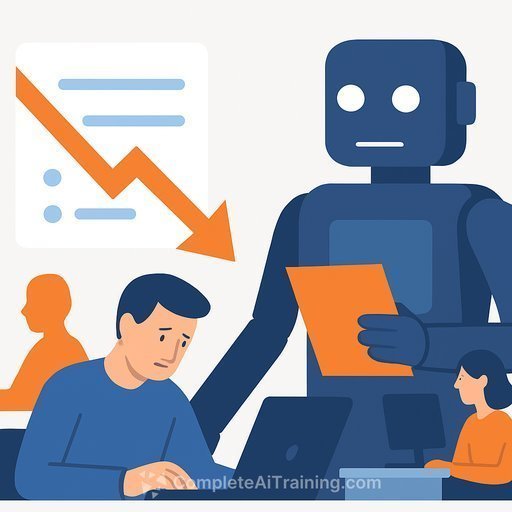
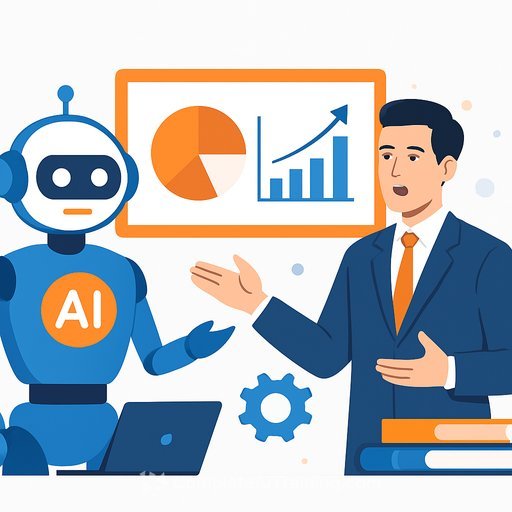
Artificial intelligence is boosting productivity without hurting employment so far, according to Reserve Bank Deputy Governor Poonam Gupta. She noted that an RBI survey shows "good to high" productivity gains and no current negative effect on jobs. The real issue isn't if AI replaces people - it's how we manage the churn as some roles fade and new ones grow.
For HR, that means planning the transition. Redeploy where possible, reskill at speed, and hire for the skills that compound with AI.
Key takeaways for HR
- Productivity is up: RBI's survey reports strong gains from AI.
- Employment effect is net positive so far, based on domestic and international surveys cited by Gupta.
- There will be churn: some jobs will go, others will be created. The challenge is easing the move from one to the other.
- Skills and labour markets need to shift to faster-growing segments.
The 90-day HR action plan
- Run a role-risk map: flag tasks most exposed to AI (repetitive, rules-based, high-volume) and identify adjacent roles for redeployment.
- Stand up an internal mobility sprint: short postings, job-sharing, and "transition roles" that bridge old workflows with AI-enabled ones.
- Launch AI literacy for all and advanced tracks for high-impact teams (ops, support, analytics, product, compliance).
- Rewrite 10 priority job descriptions to include AI use, data quality ownership, and outcome metrics.
- Pilot AI in two processes with measurable throughput (see AI for Operations): e.g., ticket triage and marketing ops. Track time saved and error rates.
- Set a redeployment target (e.g., 60-70% of at-risk roles) before considering exits.
- Create a lightweight AI policy: data use, model selection, human oversight, and audit trails.
- Start a monthly talent council with business leaders to review adoption, skills gaps, and hiring needs.
Reskill to where demand is heading
- Data literacy for all: interpreting dashboards, basic analysis, and data hygiene.
- Workflow automation: mapping processes, using no-code tools, and exception handling.
- AI operations and quality: prompt design, result evaluation, red-teaming, and documentation.
- Risk and compliance: privacy, IP, bias checks, and vendor due diligence.
- Hybrid roles: domain expertise + AI-enabled delivery (sales ops, finance ops, customer success, HR ops).
- Human strengths that compound with AI: judgment, problem solving, stakeholder communication.
Manage the churn: redeploy before you replace
Break jobs into tasks. Automate the repeatable parts and upskill people to own exceptions, client interaction, quality control, and continuous improvement. Pair exits with scholarships, micro-credentials, and guaranteed interview pathways. Treat change like a product rollout - fast feedback, frequent updates, and visible wins.
What to measure
- Productivity: cycle time, throughput per FTE, rework rates.
- Adoption: % roles using approved AI tools weekly; top use cases by team.
- Talent outcomes: redeployment rate vs. layoffs; time-to-competency for reskilled staff.
- Risk: flagged incidents, data leak attempts blocked, bias or quality escalations.
- Employee sentiment: confidence using AI, perceived fairness of transition.
Hiring shifts to make now
- Prioritize learners over perfect resumes; test for problem solving and tool fluency.
- Add "AI-in-the-loop" scenarios to interviews instead of pure theory questions.
- Source from adjacent talent pools (service desk to CX ops, QA to AI quality, analysts to RevOps).
- Use apprenticeship-style offers for mid-career transitions with clear milestones.
Governance that doesn't slow delivery
- Approved tool list with data classifications and usage rules.
- Human review for high-stakes outputs; sampling for the rest.
- Vendor checks: data retention, model updates, security certifications.
- Clear escalation paths for errors, bias, or IP concerns.
Context from the source
Poonam Gupta highlighted that the RBI's recent survey shows strong productivity gains from AI, with no negative employment effect "as of today." She emphasized the "churning" in jobs and the need to manage the transition as skills and labour move to faster-growing segments.
For background on RBI's work and releases, see the central bank's site: Reserve Bank of India.
Upskill your workforce
If you're building an AI training path by role or skill, these resources can help:
The signal is clear: productivity is rising and jobs are shifting. Get ahead of the churn with smart redeployment, focused upskilling, and metrics that prove business value.
Your membership also unlocks: