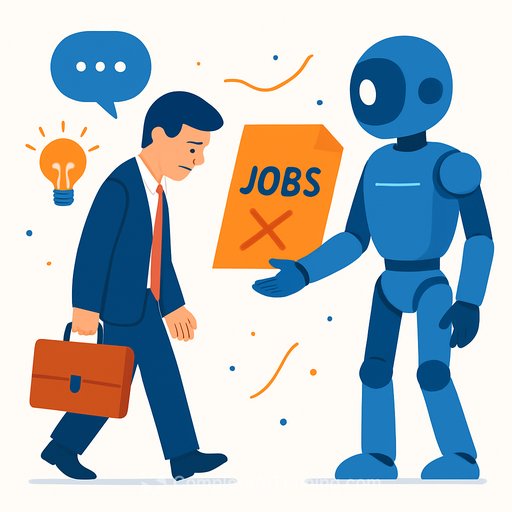
AI Is Cutting Roles. Soft Skills Decide Who Thrives: A Field Guide for HR
Jamie Dimon is clear: AI will eliminate jobs, even if it doesn't shrink headcount dramatically in the next year. His advice is simple and blunt-"learn your EQ, learn how to be good in a meeting, how to communicate, how to write." That's the signal HR can't ignore.
He also flagged a reality HR sees up close: adoption will hit faster than retraining for some workers. He urged support like relocation and income assistance so the next job can be a better one-and achievable.
Dimon isn't alone. Microsoft's Satya Nadella says as AI takes over more analytical tasks, emotional intelligence and empathy matter more. IBM's Ginni Rometty points to collaboration, judgment, and critical thinking as the new premium-skills that don't hinge on a degree but on adaptability.
Since 2023, companies have cited AI in 70,000+ job cuts as they automate grunt work and retool teams. The message for HR: shift what you hire, measure, reward, and teach. Fast.
What this means for HR right now
- Redefine your competency models. Increase the weight of EQ, writing, facilitation, and systems thinking across roles. Update job descriptions, leveling guides, and performance rubrics to reflect human strengths AI can't replace.
- Hire for behaviors, not buzzwords. Add structured interviews for conflict resolution, influence without authority, and ethical judgment. Use work samples (write a brief, facilitate a mock meeting, summarize a messy dataset) and assess the feedback they give and receive.
- Measure EQ fairly. Use validated assessments plus observed behaviors over time. Train interviewers to probe for context, actions, and outcomes-not vibes.
- Upskill where work is changing. Build short, applied sprints: writing for impact, meeting facilitation, prompt writing, process redesign, and human-AI workflow basics. Pair learning with real projects so skills stick. If you need curated tracks, see Courses by Skill and Latest AI Courses.
- Make internal mobility real. Stand up a skills inventory and talent marketplace. Offer short internal apprenticeships so people practice new tools and soft skills while doing valuable work.
- Back transitions with policy. Take Dimon's cue: offer relocation support, income bridges, benefits continuity, and targeted job search coaching where roles are impacted. Communicate timelines clearly.
- Plan headcount with tasks, not titles. Map automatable tasks per role and design the "AI + human" model. Track redeployment rate, time-to-productivity in new roles, and percent of work hours shifted from manual to creative/collaborative tasks.
- Equip managers. Train them to run better 1:1s, give clear expectations in AI-assisted workflows, and coach emotional regulation under change. Managers amplify culture-for better or worse.
- Set guardrails. Publish simple rules for AI use, bias checks, data privacy, and escalation. Keep it practical and audit quarterly.
Practical interview prompts to surface soft skills
- "Tell me about a time data (or a tool) said one thing and your judgment said another. What did you do?"
- "Describe a heated meeting you ran. How did you keep it productive?"
- "Give me an example of simplifying a complicated issue for a non-expert. Show your original and final version."
- "What's a mistake you owned publicly? How did you repair trust?"
- "Walk through feedback you gave that led to behavior change. What did you say and why?"
Training tracks HR can launch in the next 90 days
- EQ at work: self-awareness, listening, conflict recovery.
- Writing that moves decisions: briefs, executive summaries, updates.
- Meeting facilitation: agendas, timeboxing, decisions, follow-through.
- Prompt writing and review: clarity, constraints, verification.
- Process redesign: map tasks, automate the right steps, reassign human work.
- Human-AI collaboration: handoffs, quality checks, ethical use.
If you need ready-made paths by role, explore Courses by Job.
Metrics that prove it's working
- % of roles with updated competency models and interview kits
- % of internal moves from at-risk roles into reskilled roles
- Manager quality score (clarity, coaching, psychological safety)
- Training completion-to-application rate within 60 days
- Time-to-productivity for redeployed employees
- Employee sentiment on fairness and future fit (by cohort)
Why this matters
AI is absorbing routine analysis and grunt work. Soft skills-EQ, communication, judgment-are the multiplier on top of every tool. As Dimon put it, "You can earn quite a bit of money with skills." Your edge as HR is to make those skills measurable, teachable, and rewarded.
For broader context on job shifts, see the World Economic Forum's analysis of skill demand and job churn here.
Your membership also unlocks: