
AI news ·
AI will not replace doctors, says AIG Hospitals chairman D Nageshwar Reddy
AI tools at AIG Hospitals are cutting surgery dropout rates from 20% to 1%, says Chairman D. Nageshwar Reddy. He stresses AI is a support tool for doctors, not a replacement.
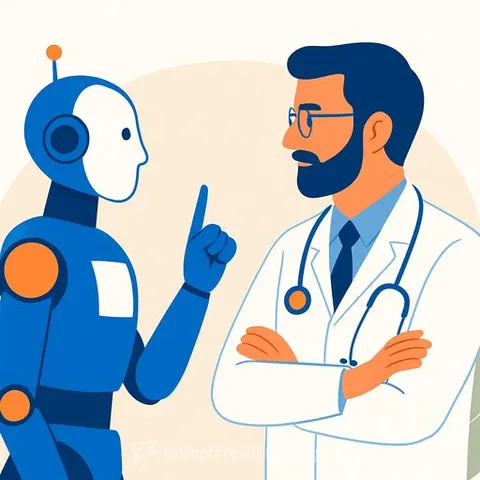
Artificial intelligence will not replace doctors but will serve as a critical support tool, AIG Hospitals Chairman D. Nageshwar Reddy told attendees at the ICFAI Foundation for Higher Education's 16th Foundation Day Lecture on July 4, 2026. Reddy detailed how AI is already changing diagnosis, drug discovery, patient care, and hospital operations, stressing that clinicians who adopt these technologies will be better equipped than those who avoid them.
AI now operates in drug discovery, radiology, telemedicine, precision medicine, genomics, cancer detection, and remote patient monitoring. In drug development, Reddy said, the technology has shortened the discovery process from decades to about two years in some cases.
AI in diagnosis and treatment
At AIG Hospitals, AI-assisted analysis of CT scans improves early cancer detection. The technology also helps doctors identify fatty liver disease using low-cost screening methods based on a few clinical indicators. Wearable AI-enabled devices monitor patients continuously, catching health issues before they escalate.
AI-powered documentation systems now prepare medical summaries from doctor-patient conversations, giving physicians more time for direct interaction. The hospital is also developing interoperable medical records that can be shared across healthcare institutions without friction.
How AI is reshaping hospital operations
Reddy described MIRA, an AI-powered Medical Information Robotic Assistant that supports doctors and nurses by fielding patient queries, cutting waiting times, and assisting in medical education. Another tool, iSAVE, is an early warning system that monitors patients around the clock and alerts doctors nearly an hour before a potential deterioration, enabling faster intervention.
AI also streamlined the hospital's pre-anaesthesia assessment. By recommending a centralized pre-surgery lounge, it reduced the need for patients to move between testing areas, dropping surgery dropout rates from roughly 20 percent to nearly one percent. The hospital's endoscopy unit, which handles about 700 procedures each day, now uses AI to manage its services.
As AI tools become more common in clinical settings, healthcare professionals may seek AI for Healthcare Courses to build skills in these diagnostic and operational technologies.
Why this matters for Healthcare Professionals
Reddy said medicine has always relied on human judgment and compassion, and that AI should be seen as a support rather than a substitute. While some medical professionals remain cautious, the hospital's experience shows tangible gains: faster drug development, far fewer cancelled surgeries, and earlier alerts that give doctors a head start on treatable problems.
For doctors, nurses, and hospital administrators, the takeaway is direct. AI tools are moving into everyday practice-from diagnosis and monitoring to record-keeping. Staying informed about these technologies, along with the data privacy and ethics questions Reddy raised, is no longer a side interest. It's a practical requirement for delivering quality care efficiently.