Workplace 4.0: AI won't steal jobs - it will unbundle them. Here's what HR should do next
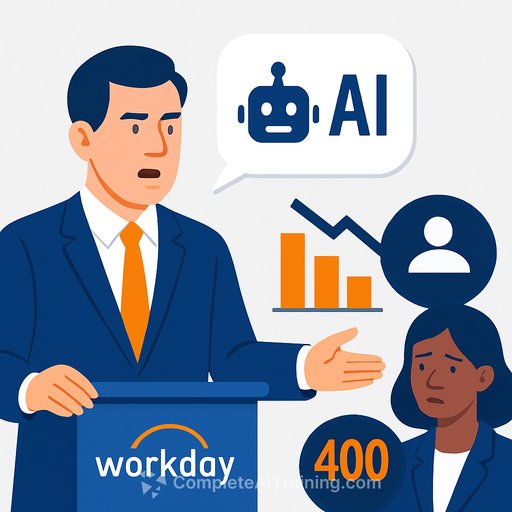
At the Microsoft AI Tour in Mumbai, Microsoft's India and South Asia President Puneet Chandok put it plainly: "AI won't steal jobs. It will dissect jobs. It will unbundle jobs." He also warned that "the real pink slip is refusal to learn."
Satya Nadella reinforced the other half of the equation: data. In his words, data is "one of the most strategic assets," but it only creates value when used contextually with AI. For HR, that translates into a skills-first, learning-heavy, data-aware operating model.
From jobs to tasks: what "unbundling" really means for HR
Roles are turning into collections of tasks. Some tasks get automated, some get augmented, and a few become premium work that requires judgment and creativity. Job titles matter less; capability and task value matter more.
- Recruiting: Scheduling, sourcing, and first-pass screening get automated; candidate conversations, assessment quality, and employer brand become core human work.
- L&D: Content curation and basic course builds get automated; real value shifts to problem-first learning design, AI fluency, and on-the-job practice.
- HR Ops: Case resolution and policy lookups move to AI copilots; exception handling, policy design, and employee trust become the differentiators.
Shift from jobs to skills - fast
If work is unbundled, your talent systems must be too. Move from job-first processes to skills-first decisions across hiring, pay, mobility, and development.
- Stand up a skills taxonomy for priority roles (start with engineering, sales, and HR itself). Keep it lightweight and usable.
- Run a skills inventory using self-assessments, manager validation, and work evidence (projects, repositories, deals, initiatives).
- Tag tasks and projects with skills and proficiency to fuel internal mobility and targeted upskilling.
- Update job architecture to include task clusters and automation potential; stop treating roles as monoliths.
Continuous learning is the oxygen mask
Chandok's point lands: refusing to learn is the risk. Don't outsource learning to employees alone - make it part of the workflow, not homework after hours.
- Set an AI fluency baseline for all knowledge workers (prompts, reviewing model output, privacy and compliance basics).
- Run monthly capability sprints tied to real work (e.g., "30% faster candidate pipelines," "automate 5 recurring HR tasks").
- Reward skill acquisition with badges tied to pay bands, not just course completions.
Data is your competitive edge - and your biggest risk
Nadella's reminder is practical: AI value depends on the data you feed it. For HR, that means clean, secure, contextual data pipelines - and clear rules.
- Inventory HR data sources and define what can and cannot be used with AI (PII, health data, union data, candidate data).
- Enable context-aware AI via retrieval-augmented generation (RAG) for policies, role guides, and knowledge bases.
- Publish a simple AI use policy for employees and vendors (prompt hygiene, data retention, review standards, audit trails).
Proof that AI can lift outcomes, not just cut costs
Microsoft cited an 80% reduction in turnaround time on cybercrime investigations in a Maharashtra project using its AI tools. Similar patterns show up across corporate functions when tasks are unbundled and reassembled with AI support. The opportunity for HR: faster operations, better talent decisions, and a stronger learning culture - at the same time.
90-day HR action plan
- Days 0-30: Pick three HR workflows to redesign with AI (e.g., JD creation, candidate outreach, policy Q&A). Define success metrics and data boundaries.
- Days 31-60: Launch an AI fluency baseline for HR and recruiters. Pilot skills inventory for two job families. Stand up an internal prompt and playbook library.
- Days 61-90: Update job architecture with task clusters and automation flags. Tie 1-2 pay decisions to verified skills. Publish an AI use policy and review cadence.
What to measure
- Time-to-fill and quality-of-hire (with post-90-day performance checks)
- Internal mobility rate and percentage of roles filled by skills match
- Task automation ratio (hours saved per workflow) and error rates
- Learning participation, skill verifications, and manager-reported impact
- AI governance metrics: policy adherence, flagged incidents, data access reviews
Practical resources
Upskill your teams
If you're formalizing an AI learning path by role, explore curated options for different job families.
Complete AI Training: Courses by job
The takeaway is simple. Jobs aren't disappearing - they're decomposing. HR's edge will come from rebuilding work around skills, teaching people to learn in the flow of work, and putting guardrails around data so AI can actually help.
Your membership also unlocks: