
AI news ·
AI's potential in healthcare depends on a shift toward prevention
AI tools now auto-generate clinical notes and flag early disease risk, but their real value hinges on shifting U.S. medicine toward prevention. Only a fraction of $5 trillion in annual healthcare spending targets avoidable conditions.
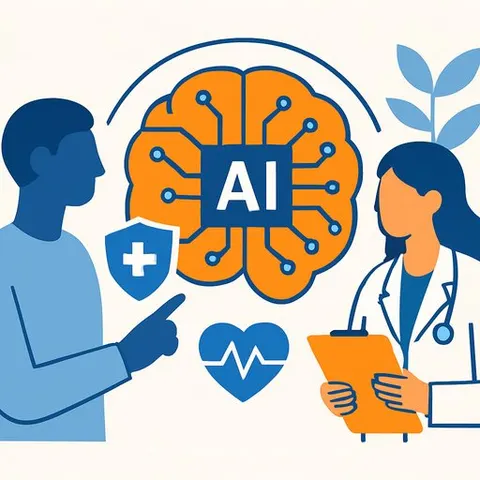
AI Could Transform Healthcare-If It Focuses on Prevention
Artificial intelligence is gaining traction in healthcare for three specific reasons: it reduces administrative burden, improves diagnostic accuracy, and can catch disease earlier. But its real value depends on whether it shifts American medicine toward prevention rather than treatment.
Physicians spend nearly two hours on paperwork for every hour of direct patient care. AI for healthcare applications now auto-generate clinical notes and automate coding and billing, freeing clinicians for patient interaction.
The diagnostic gains are measurable. A March study found AI-enhanced mammography increased breast cancer detection by 15.2%. Pattern-recognition capabilities are already reshaping how radiologists and other specialists work.
AI also addresses provider shortages by expanding access to low-cost triage and support-supplementing, not replacing, clinicians. The technology appears durable enough that healthcare organizations should prepare for its presence.
Prevention remains the unfinished work
Up to half of annual medical conditions treated in the U.S. are avoidable with proper preventive care. Some estimates place it as high as 80% when including lifestyle changes. Yet only a small fraction of the roughly $5 trillion annual healthcare spending goes toward prevention.
American healthcare functions as "sickcare"-reactive rather than preventive. AI's potential lies in closing that gap through two mechanisms: earlier detection and behavior change.
Earlier detection through data integration
The U.S. healthcare system fragments patient data across incompatible electronic health records. A patient with rising blood sugar documented at their primary care visit may have no visibility into prescription adherence, activity levels from wearables, or emergency room visits at other hospitals.
Warning signs exist. Clinicians simply cannot see them.
AI data analysis can pull from multiple sources to create a fuller health picture. Rather than isolated snapshots, AI identifies trends-catching early metabolic signs like rising A1c, weight gain, and activity decline before chronic disease develops.
Real-time risk scoring enables earlier, more targeted intervention. This does not solve the fragmentation problem, but it makes the invisible visible.
The behavior change problem
Seeing risk earlier solves only half the equation. Over 50% of chronic disease patients don't take medications as prescribed. Adherence to lifestyle advice-diet, exercise, weight loss-is even lower.
AI can help. By tracking individual behavior, it provides real-time feedback tied to actual context. If blood sugar spikes after dinner, the system might suggest a short walk or dietary adjustment matched to the person's habits, not generic recommendations.
AI also scales health coaching. It can help individuals set concrete, measurable goals and track progress over time. This creates ongoing accountability without requiring a human coach for every patient.
More broadly, AI reduces friction. Healthy choices require effort. AI cannot eliminate that effort, but it can simplify decisions and make healthier defaults easier to choose.
The structural problem
AI's promise runs into a hard reality: the healthcare system is structurally misaligned with prevention. Without serious policy reform, that misalignment blunts AI's impact.
The technology alone cannot fix a system designed to profit from treatment rather than prevention. Healthcare organizations deploying AI for prevention should expect results to plateau without accompanying policy changes that reward prevention and penalize preventable disease.