
AI news ·
Ancient philosophy offers CEOs a framework for leading through AI disruption and uncertainty
AI can automate tasks but can't build trust or fix a broken team. CEOs increasingly need philosophy, emotional awareness, and human judgment-not just better data.
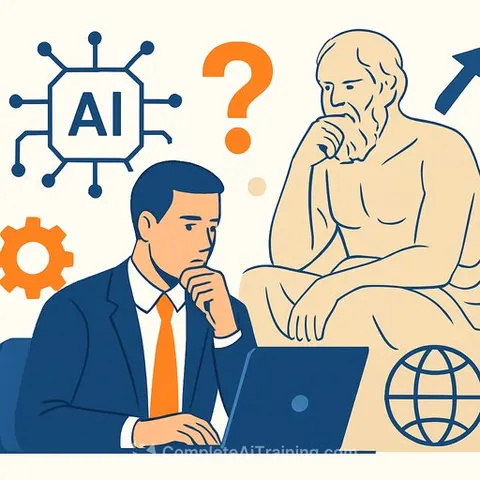
CEOs Need Ancient Wisdom to Lead Through AI Disruption
Modern executives face a fundamental mismatch. Organizations have become sophisticated at processing information while neglecting the human dynamics required to act on it effectively. As artificial intelligence accelerates, this gap may widen-unless leaders integrate two distinct ways of understanding the world.
Greek philosophy emphasized logic, rational inquiry, and external observation. Indian philosophy focused inward, exploring consciousness, interconnectedness, and harmony. Both traditions sought deeper truth through different methods. Today's CEOs need both.
Why Data Alone Isn't Enough
Decades of data-driven leadership have delivered measurable gains. But employee engagement remains low. Teams struggle with burnout, fragmentation, and distrust despite unprecedented digital connectivity. Better information hasn't solved these problems.
AI will intensify this tension. The technology can analyze vast datasets and automate repetitive work in seconds. It cannot generate trust, belonging, courage, or moral responsibility. Those remain distinctly human domains.
A dysfunctional team with better technology simply becomes a faster dysfunctional team. Technology accelerates productivity. It cannot automatically create alignment or collaboration.
The Real Work of Leadership Is Changing
The CEO's role is shifting from authority figure to environment builder. Today's challenges move too quickly for any individual to solve alone. The best thinking increasingly emerges from across the organization, not from the top.
This requires curiosity, humility, and emotional awareness. It means fostering healthy peer dynamics where employees influence, challenge, and elevate one another daily. Organizational culture is shaped as much horizontally as vertically.
Peer dynamics often determine whether trust grows and innovation flourishes long before formal leadership initiatives take hold.
Harmony as a Competitive Advantage
Harmony does not mean avoiding disagreement. Healthy organizations still debate ideas and hold one another accountable. It means remaining aligned around purpose and connected by trust while working through complexity.
Psychological safety, communication, and collaboration have moved from soft skills to strategic priorities. They determine how well an organization adapts when uncertainty is constant.
Rethinking How Organizations Learn
Corporate education has long prioritized technical training and immediate workplace skills. These remain essential. But many organizations now recognize that technical capability alone is insufficient in ambiguous environments.
A broader education-one that develops critical thinking, communication, ethical reasoning, and adaptability-may become more valuable as AI handles specialized tasks. This is not an argument against skill-building. The future belongs to people who are both educated and well trained. Those ideas complement each other.
Technical training helps people perform specific tasks. Broader education helps them think critically, navigate ambiguity, and understand the human consequences of their decisions.
What Leaders Can Do Now
Ask teams not only what they are accomplishing but how they are working together. Create environments where reflection matters alongside execution. Reward collaboration over internal competition.
Model this behavior yourself. Demonstrate willingness to listen, learn, and stay intellectually flexible. Employees increasingly seek signs that leaders are thoughtful, grounded, and genuinely connected to the people around them.
In an organization shaped by artificial intelligence, the most important leadership questions are becoming deeply human. Start there.
Learn more: AI Learning Path for CEOs offers strategic guidance on leading organizations through technological transformation. AI for Executives & Strategy covers business intelligence and organizational adaptation in detail.