
AI news ·
Army medical maintenance teams train on AI tools to improve audit and quality management processes
U.S. Army Medical Logistics Command trained staff from three states on AI-assisted quality audits in late April. The two-day session covered prompt writing and setting limits on AI outputs for ISO 9001 compliance work.
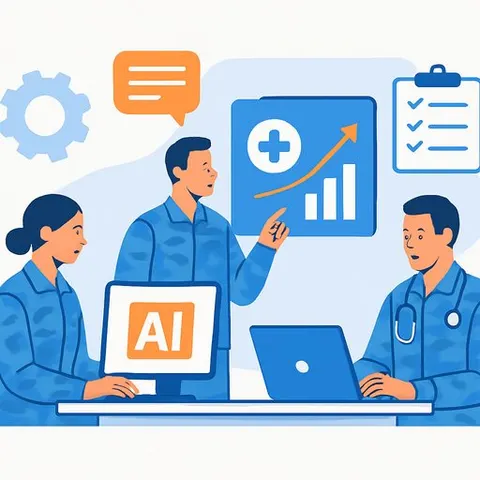
Army Medical Maintenance Teams Train on AI for Quality Audits
The U.S. Army Medical Logistics Command held a training event in late April at its Utah operations center to teach staff how to use artificial intelligence for quality management and auditing work. Representatives from medical maintenance teams in California, Pennsylvania, and Utah attended the two-day session, which focused on building effective AI prompts and setting boundaries for the technology.
The organization has maintained ISO 9001 certification since the early 2000s. The training represented a deliberate step to stay current as the Department of War pushes AI adoption across operations.
Teaching AI to Follow Instructions
The core of the training was prompt engineering - the practice of writing clear instructions that tell AI systems what to do and when to stop. An industry expert led participants through 10 hands-on exercises using what trainers call "persona blocks," "task blocks," and operational constraints.
The trainer explained that large language models are built to please users and can produce inaccurate information without proper structure. Vague instructions produce vague results.
Christine Ruiz, quality manager for the Utah operations division, initially approached AI cautiously. After the training, she saw the parallel to parenting: setting guardrails upfront reduces the need for corrections later.
"Who would have thought I could have told AI to do stuff and give it the rules like I do with my own kids?" Ruiz said. "So on the back end of the product, I don't spend so much time."
Rethinking How to Measure Customer Satisfaction
Ruiz identified a specific operational problem AI could help solve. ISO 9001 requires organizations to measure customer satisfaction, but the medical maintenance command often serves as the sole source for Army medical equipment repairs - making traditional surveys unreliable.
AI helped her team identify alternative metrics: analyzing the frequency of direct customer feedback and tracking equipment return rates. These approaches provided a clearer picture than surveys alone.
The AI-generated audit reports offered more depth and detail than manual reports, Ruiz said, helping auditors see patterns they might otherwise miss.
Practical Results for Field Operations
The goal is straightforward: faster identification of gaps in processes, more thorough audits, and medical equipment returning to the field in better condition. All of this supports the broader readiness mission of the Army's medical supply command.
Jorge Magana, director of the medical maintenance directorate, said the organization cannot afford to ignore the shift. "If we don't embrace AI, we will get left behind," Magana said. "We need to continuously learn and improve."
For operations professionals, the lesson is practical: AI for operations work requires understanding how to give clear instructions and set boundaries. The technology itself is not the barrier. Knowing how to use it is.