ARPA-H Launches AI Program to Speed Up Biomedical Research
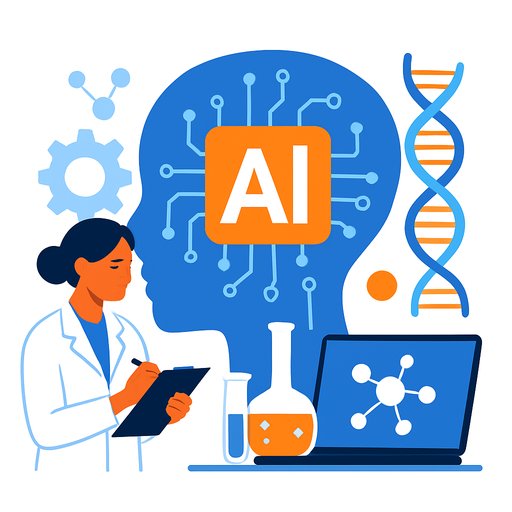
The Advanced Research Projects Agency for Health announced a new initiative Tuesday designed to accelerate biomedical discovery by connecting AI systems, lab workflows and cross-disciplinary teams. The Intelligent Generator of Research, or IGoR, program will fund development of AI tools that generate, validate and refine research more efficiently for complex diseases like Alzheimer's and Parkinson's.
The program addresses persistent problems in biomedical research: fragmented workflows, siloed disciplines and the replication crisis that undermines scientific credibility. ARPA-H will support teams across artificial intelligence, computational biology and experimental science to build systems that model diseases, identify knowledge gaps and recommend which experiments to run next.
How the Program Works
IGoR will establish standardized experimental protocols and coordinate a network of laboratories to replicate studies and generate validated data. The data feeds back into disease models, creating what ARPA-H describes as an adaptive research ecosystem that continuously improves itself.
ARPA-H Director Alicia Jackson said the goal is to compress research timelines. "Families shouldn't wait for breakthroughs while new knowledge trickles through the literature and researchers do experiments that are the most familiar rather than the most informative," Jackson said. "With IGoR, ARPA-H will modernize how evidence is generated, shared, and validated-so even research beyond our accelerated science portfolio can deliver breakthroughs in years, not decades."
Part of Broader Strategy
IGoR fits within ARPA-H's effort to expand partnerships with researchers, startups and technology companies. Since Jackson took over as director in late 2025, the agency has pursued initiatives spanning healthcare cybersecurity, distributed biomanufacturing and advanced medical technologies.
For researchers managing complex studies, understanding how AI can integrate with existing lab infrastructure and data systems is increasingly relevant. AI for Science & Research covers practical applications in these areas.
Your membership also unlocks: