Chan Zuckerberg Biohub commits $500 million to AI-driven cell modeling
Chan Zuckerberg Biohub announced a $500 million initiative on April 29 to build artificial intelligence systems that can predict how human cells behave. The Virtual Biology Initiative aims to create an open database of cellular data large enough to train AI models that simulate disease mechanisms and treatment responses.
The funding breaks into two parts: $400 million for internal research and technology development, and $100 million in grants to external research institutions worldwide.
Current AI models lack the scale of biological data needed to accurately represent how cells function across different conditions. Researchers say existing datasets are orders of magnitude too small. The initiative will fund new technologies to observe cells at molecular and tissue levels, capturing data from both healthy and diseased states.
How the models would work
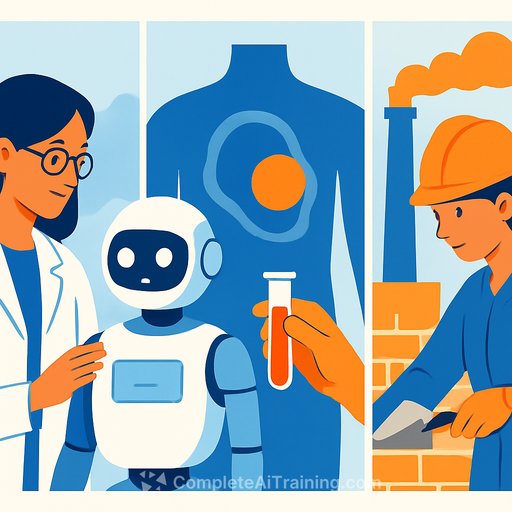
Scientists envision using the resulting data to build "digital laboratories" - computational models that let researchers test how cells respond to stress, disease, or treatment without running physical experiments first. This could accelerate drug discovery and disease research by reducing reliance on early-stage lab work.
Alex Rives, Biohub's Head of Science, said the project requires "orders of magnitude more data than exists today" and that "a coordinated global effort" is necessary. All data generated will be made freely available to researchers worldwide.
Who's involved
Biohub is developing the initiative with NVIDIA and plans to involve a broader network of international institutions. The organization emphasized that the scale of data collection requires participation from multiple research centers and consortia across the globe.
For researchers interested in the intersection of AI and biological discovery, AI for Science & Research covers practical applications in data modeling and laboratory automation.
Your membership also unlocks: