
AI news ·
Artificial intelligence threatens trust between writers and readers
A Commonwealth Short Story Prize winner was flagged as 100% AI, sparking an authenticity crisis. The scandal threatens the core trust between writers and readers.
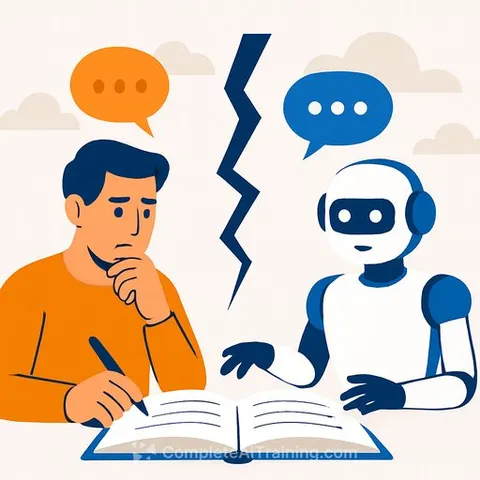
The literary world is confronting a crisis of authenticity after the Commonwealth Short Story Prize awarded its top honor to a story that may have been written by artificial intelligence. The controversy, which surfaced in May 2026, has cast doubt on the integrity of creative competitions and the trust that underpins the relationship between writers and their readers.
The writer-reader bond
For years, editors at short-story competitions have witnessed the intimate process of writers crafting worlds from imagination. At The Telegram's Cuffer Prize in St. John's, entries arrived from amateurs and polished authors alike, each story a bid to connect with an audience. That connection, as Margaret Atwood observed when accepting the 2016 Peace Prize of the German Book Trade, is deeply personal. "Reading a book is surely the most intimate experience we can have of the inside of another human being's mind," she said. The author entrusts the reader with a truth revealed between them-a bond that relies on the story being genuinely human.
AI controversy rocks literary prize
That bond was tested when Granta publisher Sigrid Rausing said the winning story, "The Serpent in the Grove" by Jamir Nazir, might involve "AI plagiarism." Rausing said, "It may be that the judges have now awarded a prize to an instance of AI plagiarism - we don't yet know, and perhaps we never will know." Nazir was described as a Trinidadian writer of East Indian heritage, but the uncertainty around the work's origins has unsettled the literary community. Commonwealth Foundation director general Razmi Farook told The Guardian that until reliable AI detection tools exist, the prize "must operate on the principle of trust." For readers, that trust is now in question.
Detection tools leave doubt
Efforts to verify the story's authorship have only deepened the uncertainty. Writer and editor Erica Wagner entered a section of the story into Pangram, an AI detection program viewed as reliable by the Society of Authors. The result was "100 per cent AI," she wrote in The Observer, but added a caveat: "the AI that detects the AI is trained on human writing, so, really, where are we? In the dark." Academic and author Julian Novitz, a previous prize shortlistee, suggested the incident could be "a parody or a warning." For many, it feels like a warning of more inauthentic experiences to come.
Why this matters for Writers
Writers face a growing need to demonstrate the authenticity of their work as AI-generated content becomes harder to detect. The scandal underscores the risk that readers may begin to question the human origin of any story, eroding the personal connection that literature depends on. For those looking to adapt, resources like AI for Writers provide training on AI content writing, copywriting, and publishing automation. A broader perspective on AI's role across creative fields is available through AI for Creatives, which covers tools and strategies for artists and writers dealing with this shift.