
AI news ·
Textbook authors file copyright lawsuit against Meta over AI training
Meta is sued for training Llama on copyrighted textbooks without permission. The case puts textbook authors' royalty income at risk.
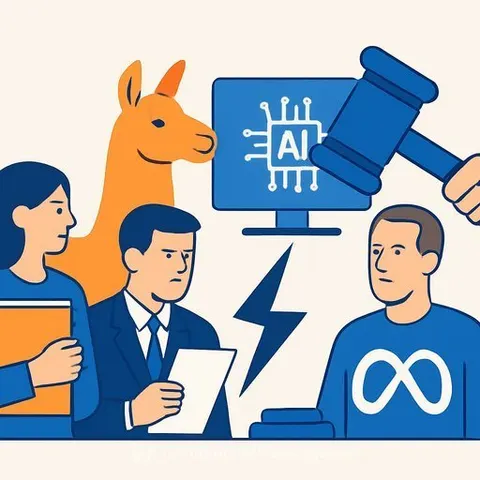
Meta Platforms Inc. faces a proposed class action filed Thursday in California federal court, accusing the company of feeding copyrighted textbooks into its Llama large language model to train the artificial intelligence system. The lawsuit claims Meta never sought permission from the textbook authors nor offered compensation, raising direct financial and legal stakes for writers whose work now fuels generative AI tools.
The core allegation
The authors say Meta used their textbook content without authorization during the training of Llama, the company's open-source large language model. A copyright infringement claim sits at the center of the complaint. The suit seeks class status, meaning other textbook authors in similar circumstances could join.
This is not the first legal challenge aimed at how AI developers gather training data. Several lawsuits against OpenAI, Stability AI, and others have probed the boundaries of fair use and the rights of content creators, but Thursday's filing specifically targets Meta's practices with educational texts.
Training data and the writer's bottom line
Textbook authors often spend years developing material. They depend on royalties and licensing fees that hinge on the exclusivity and integrity of their content. When a large language model ingests that work without a license, the authors argue, the model can later generate text that undercuts the market for the original books.
Courts have yet to deliver a definitive ruling on whether using copyrighted material for AI training qualifies as fair use. Each new case adds pressure on lawmakers and the industry to clarify the rules. For writers who already navigate tight margins, the outcome will influence whether their work can be treated as free raw material by technology companies.
Why this matters for writers
The lawsuit signals that content creators are increasingly willing to fight back when their intellectual property ends up in training datasets without a deal. It also highlights the stark divide between the people who generate the text that models learn from and the companies that monetize the resulting AI.
Writers who use or cover generative tools can track these legal developments to understand what data practices might be sanctioned or banned. Resources that explain how to integrate AI into a writing workflow - such as courses on AI for Writers - often assume a landscape in which training data is sourced legally. A ruling against Meta could redefine that landscape, making it harder for models to freely absorb copyrighted books and potentially leading to licensing models that compensate authors directly.