
AI news ·
Asia biotech financing enters more selective phase as AI and GLP-1 companies target Hong Kong listings
Asia's biotech financing has grown selective, demanding clinical and operational readiness beyond scientific promise. AI drug discovery and next-gen metabolic firms plan Hong Kong listings.
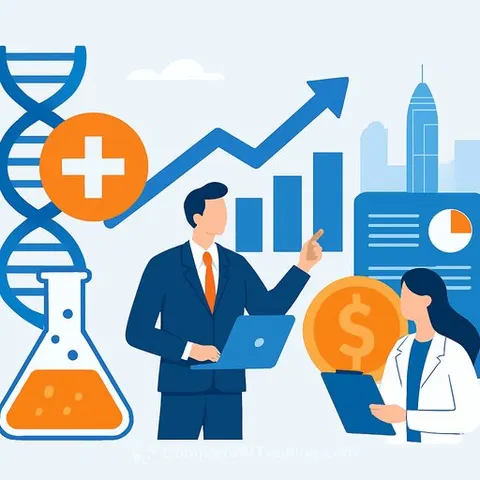
After a prolonged period of volatility, Asia's biotech financing environment is entering a new, more selective phase where companies are assessed on clinical execution, commercial relevance, and operational readiness beyond scientific promise. AI-enabled drug discovery and next-generation metabolic disease firms are prominent among those planning Hong Kong listings, drawn by the exchange's flexible pathways and sophisticated healthcare investor base.
AI drug discovery: From technology story to clinical translation
The conversation around AI-enabled drug discovery has shifted significantly. Early attention focused on the promise of AI, but companies now frame their stories around biological validation, translational execution, and pipeline advancement. Investors increasingly distinguish between platforms that merely improve discovery efficiency and those that produce differentiated therapeutic assets with reproducible validation and a credible clinical path.
Many current-generation AI drug discovery companies integrate computational models with proprietary data generation and experimental validation. They build closed-loop workflows combining AI, wet-lab infrastructure, and high-throughput experimentation. A platform story becomes more compelling when supported by concrete asset-level milestones and evidence that the technology can repeatedly generate actionable programs.
Strategic collaborations with established pharma, advancement of internal pipelines, and development of end-to-end platforms covering data generation, molecular design, and development decision-making are common themes in how these businesses position themselves for financing. For healthcare professionals evaluating such platforms, an AI Learning Path for Biochemists offers a framework to understand the computational and experimental integration that underpins credible AI drug discovery.
GLP-1 and metabolic innovation: Differentiation matters
Obesity and metabolic diseases have generated intense financing activity. As the sector matures, the focus has turned from first-generation GLP-1 therapies to differentiated approaches. Oral formulations, less frequent dosing schedules, improved body-composition outcomes such as lean muscle preservation, and next-generation mechanisms are now in the spotlight. These combine GLP-1 with complementary pathways like GIP, glucagon, and amylin, and many companies are positioning assets within a broader cardiometabolic framework that targets type 2 diabetes, cardiovascular disease, chronic kidney disease, sleep apnea, and MASH.
From a capital markets perspective, the discussion goes beyond clinical efficacy. Companies approaching the public markets now place greater emphasis on manufacturing readiness, CMC capabilities, supply-chain resilience, and commercial scalability. Intellectual property strategy and partnership structures are also critical, as collaborations may support development, commercialisation, and access to capital.
Choosing the right pathway in Hong Kong
Hong Kong's listing pathways continue to evolve alongside biotech company profiles. Recent regulatory refinements, including proposed changes to the weighted voting rights framework and the ongoing development of the Chapter 18A regime, reflect an effort to accommodate diverse business models. However, determining the most suitable pathway requires careful analysis of a company's business model, revenue profile, collaboration and licensing arrangements, clinical development stage, and the role of proprietary technology.
Companies considering a Hong Kong listing benefit from early preparation beyond scientific progress. Intellectual property ownership, licensing and collaboration structures, corporate governance, related-party arrangements, and disclosure controls are now receiving increased attention. Firms that combine technological advancement with strong legal, operational, and organisational foundations are best positioned to access public markets efficiently.
Why this matters for healthcare professionals
For professionals in healthcare R&D, investment, or partnering, the shift toward more selective public-market scrutiny means that scientific promise alone no longer opens doors. Companies must demonstrate readiness across clinical, manufacturing, and governance dimensions. Understanding these trends helps professionals evaluate biotech prospects realistically, particularly as AI-driven discovery and metabolic therapies reshape pipelines. The Hong Kong market's evolving framework also affects which companies secure capital and when. Resources such as the AI for Healthcare hub provide ongoing insight into how artificial intelligence is altering drug development, equipping professionals to make sharper assessments of commercial and clinical potential.