
AI news ·
Australian Fashion Week designers experiment with generative AI but find image outputs unreliable
Fashion designers at Australian Fashion Week are using AI for trend forecasting and early ideation, but image generators still produce anatomically flawed outputs. Designers treat AI as a starting point, with final creative decisions staying human.
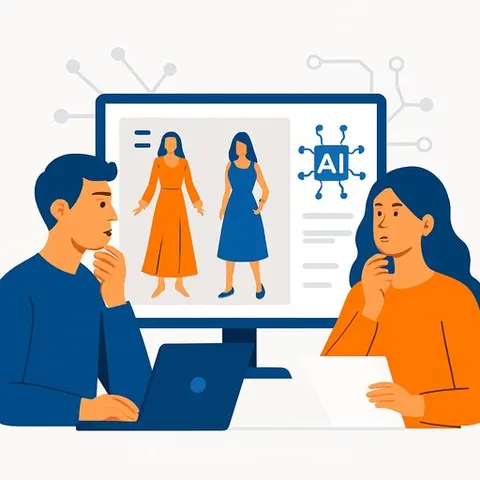
Fashion Designers Use AI for Ideation, Grapple With Quality Limits
Designers at Australian Fashion Week are experimenting with generative AI for trend forecasting, creative prompts, and administrative work, but the technology's practical constraints are reshaping how they integrate it into their workflows.
Melbourne-based designer Karla Špetic told ABC News she uses AI for slogan generation and early visual experiments. She also found significant limitations. Image generators produced anatomically flawed outputs-designs with three or six fingers on hands. "The human lived experience is simply irreplaceable," Špetic said.
Špetic described her approach plainly: "AI didn't replace my creativity, but it did demand clarity." She treats AI outputs as starting material rather than finished work.
How Designers Are Actually Using AI
Across creative industries, teams deploy generative AI for four main functions: rapid ideation, prompt-driven image exploration, trend forecasting using social data, and automating routine administrative tasks.
Two technical constraints emerge consistently. Prompt engineering requires repeated iteration to get usable results. Current image generators still produce anatomically or semantically incorrect artifacts that need human correction.
This means designers work in human-in-the-loop pipelines. AI accelerates early-stage work. Final aesthetic decisions remain with the designer.
What Matters for Your Practice
The gap between AI capability and visual fidelity remains real. If you're testing generative AI for design work, expect to spend time refining prompts and correcting outputs rather than using generated images directly.
Copyright and provenance questions loom larger as AI-created imagery appears on runways. Brand identity and craft authenticity are central concerns for houses considering visible AI elements in collections.
Watch for major fashion houses publishing explicit guidance on acceptable AI usage. Trade publications will likely report concrete examples of deployed AI features during upcoming seasons-practical case studies showing what works at scale.
If you work in design or creative direction, AI Design Courses and Generative Art Courses can help you build workflows that treat AI as a tool for scaffolding rather than replacement.