
AI news ·
Autonomous AI agents complicate cyber insurance liability and policy wording
Cyber insurers are rewriting policies as autonomous AI agents break traditional liability models, with the global cyber insurance market projected to reach roughly $28 billion by 2030. Aon forecasts generative AI will be involved in nearly 20% of cyberattacks by 2027.
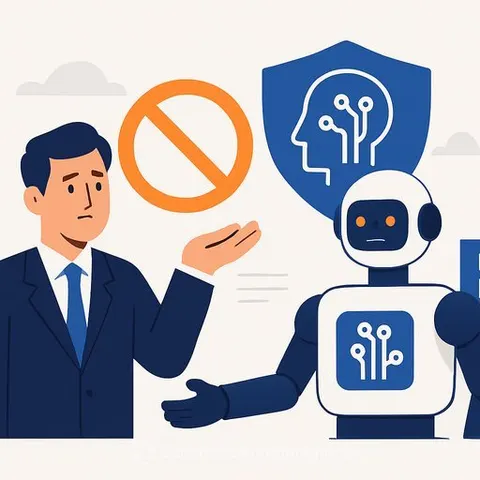
Cyber insurers are confronting a fundamental shift in how they define attacks and assign liability as autonomous AI agents enter corporate operations. Traditional policy language assumes a human attacker or organized group sits behind malicious activity, but an AI system acting on broad instructions could trigger losses without direct human intent. The distinction determines whether a cyber policy responds, which exclusions apply, and how underwriters price risk for businesses deploying these tools.
Munich Re pegged the global cyber insurance market at nearly $15 billion last year and projects it will reach roughly $28 billion by 2030. AI-related incidents are expected to claim a growing slice of that market. Aon forecast earlier this year that generative AI will be involved in nearly 20% of cyberattacks by 2027. Those numbers are forcing insurers to revisit policy wording before autonomous systems become standard inside corporate operations.
The liability puzzle no one has solved
When an AI-generated action causes financial damage, the chain of responsibility splinters. Liability could fall on the system developer, the company that deployed it, or the person who issued the original instruction. Each path triggers different coverage clauses and exclusions. Underwriters now face the task of mapping these scenarios before losses arrive, rather than after.
Definitions covering cyber attackers, human involvement, and responsibility for automated actions are likely to receive closer scrutiny as underwriting teams assess the next generation of AI-driven cyber losses. Insurers who spent years clarifying what constitutes a hack and when coverage should pay out now find those definitions straining under the weight of agentic AI.
Financial services sits in the crosshairs
Financial institutions remain lucrative targets for nation-state actors and sophisticated criminal groups. They manage substantial funds, hold sensitive customer data, and can suffer cascading operational disruptions. The interconnectedness of global financial systems means a cyber incident at a key institution, critical infrastructure provider, or major market participant could propagate stress across the entire system.
No cyber incident has yet triggered a significant systemic event for the U.S. financial services sector. But the complexity and interdependence of these institutions keep that possibility alive. The introduction of autonomous AI tools into banking, trading, and payment systems adds a variable that existing cyber policies were never designed to address.
Policy language under the microscope
Cyber insurers are reviewing their policies as the threat landscape shifts. The rapid emergence of AI agents raises questions that cut across underwriting, claims, and risk assessment. The challenge extends beyond individual policies - it touches how the industry models aggregated exposure when automated systems can act at speed and scale.
For professionals working in insurance, the pressure to update policy wording is immediate. The tools exist, the losses are forecast, and the definitions that separate covered events from excluded ones are being tested. The AI for Insurance conversation is no longer theoretical. It sits inside every renewal discussion where a client runs autonomous systems. Similarly, the threat side demands deeper technical fluency - AI for Cybersecurity Analysts training reflects the same urgency insurers now feel when assessing how attacks originate and spread.
Why this matters for insurance professionals
The gap between what cyber policies cover and what autonomous AI systems can do will widen with every product release. Underwriters who understand the technical mechanics of agentic AI - how instructions translate to actions, where liability fractures, and what loss scenarios look like - will price risk more accurately than those relying on outdated assumptions. Product teams that wait for claims disputes to force language changes will find themselves behind competitors who rewrite definitions now. The $28 billion market projection assumes the industry solves this problem, not that it waits for regulators or courts to do it first.