B.C. hiring outlook 2026: tariffs, AI, and a tilt toward contract talent
Economic uncertainty from U.S. tariffs and the fast uptake of AI is set to pressure B.C.'s labour market in 2026. Many companies are pausing on permanent headcount, even as pockets of growth emerge in infrastructure, biotech, and quantum computing.
"It's going to be a very challenging labour market, both for employers and for employees," said economist Roslyn Kunin. "When businesses don't know what's going to happen, they avoid making long-term commitments. And hiring people is a long-term commitment."
What HR needs to know right now
B.C.'s unemployment rate hit 6.4% in September 2025. The provincial budget projects the tariff impact peaking mid-2026, with unemployment likely reaching 6.7%. That backdrop is pushing leaders to trim risk and stay flexible on workforce plans.
For HR, this means tighter requisition approvals, slower permanent hiring, and greater reliance on contractors, part-timers, and fixed-term project teams. See AI for Human Resources for guidance on workforce analytics and recruitment automation.
Compensation and competition
Expect modest salary movement. "We're seeing companies budgeting for fairly conservative salary increases in 2026, between three and four per cent," said Stephanie Hollingshead, CEO of TAP Network. Layoffs have swelled applicant pools-one senior role drew 300 applications in five days-so the market still leans employer-friendly.
The exception: specialized skill sets. Even with more candidates, niche expertise remains hard to find and slow to fill.
AI reshapes roles-especially at the junior level
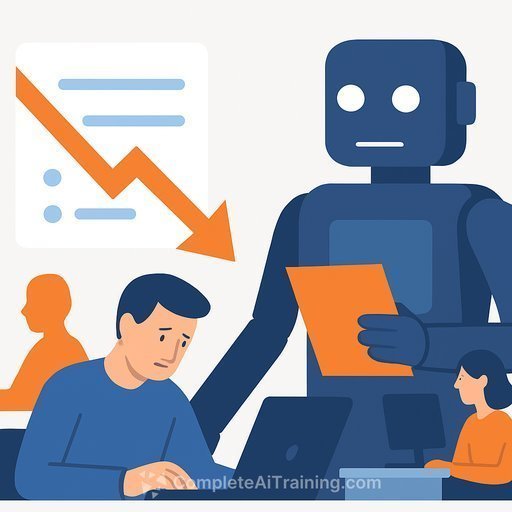
AI adoption is replacing some entry-level work, raising questions about the future pipeline for mid- and senior-level talent. Kunin noted the impact goes beyond tech, touching white-collar roles from higher-level clerical to middle management. With those jobs already limited in B.C., competition is intensifying. For background on capabilities and implications, see Generative AI and LLM.
General degrees without a defined skill anchor are at a disadvantage. HR teams should expect higher screening volumes and a sharper focus on proof-of-skill.
Where hiring is still growing
There's movement-especially around big projects and targeted sectors. Ashleigh Brown of Robert Half reports strong demand tied to infrastructure and maintenance, with hiring for structural, mechanical, and electrical engineers. Notable projects include LNG Canada Phase 2, Red Chris Mine, the North Coast Transmission Line, and the Ksi Lisims LNG project.
Leadership roles are evolving, too. "You need to be almost like a tripod now-you need to have finance, operations and data analytics, and that blends into the ability to use AI of some form…for anyone looking at a director level and above," Brown said.
Investment continues in AI and quantum, life sciences, and agri-tech-priority areas under B.C.'s Look West strategy. Recent capital raises include nearly $700M for Clio (Themis Solutions), $180M for Photonics Inc., $180M for Aspect Biosystems, $49.9M for Stemcell Technologies, $40M for 4AG Robotics, and $25.6M for pH7 Technologies.
The shift to flexible work models
Companies still need work done-they're just hesitant to grow payroll. Part-time roles in Canada grew 2.7% between September and November 2025, compared with 0.5% for full-time. Kunin's advice: "If people are willing to work in a consulting contracting mode, they can probably find a lot more work than they can find jobs."
For HR, that means building contractor benches, revisiting vendor agreements, and tightening compliance and classification processes.
Practical moves for HR leaders
- Rebalance headcount plans: Shift a portion of 2026 reqs to contract or fixed-term roles, especially in functions exposed to tariff or tech volatility.
- Prioritize critical projects: Staff to milestones on infrastructure, maintenance, and revenue-adjacent initiatives; keep discretionary work lean.
- Refresh leadership profiles: For director+ roles, require finance literacy, operations fluency, data analytics capability, and real AI tool use.
- Guard the talent pipeline: If junior roles are reduced, use internships, co-ops, apprenticeships, and rotational programs to keep future leaders in view.
- Tighten selection for specialized skills: Use work samples, case challenges, or short paid trials to validate capability before committing FTE budgets.
- Update compensation plays: Budget 3-4% increases on average; hold back for targeted market adjustments where skills are scarce.
- Expand sourcing for trades and technicians: Build partnerships with polytechnics, unions, and regional programs; set up rolling requisitions for high-volume trades.
- Stand up a contractor "bench": Curate a shortlist across engineering, data, AI, cost control, and PMO; pre-clear rates and contracts to cut time-to-start.
- Upskill internally on AI and data: Equip HR and people managers to assess AI skills, set standards, and deploy practical tools in daily work.
Resources
- Statistics Canada labour data for tracking part-time vs. full-time trends and unemployment shifts.
- AI courses by job role to quickly level up analytics and AI fluency across HR, finance, and operations.
Bottom line: expect caution, not collapse. Lock in flexible staffing, hire with precision, and build AI-ready leaders. The teams that stay agile on structure and sharp on skill depth will come out ahead in 2026.
Your membership also unlocks: