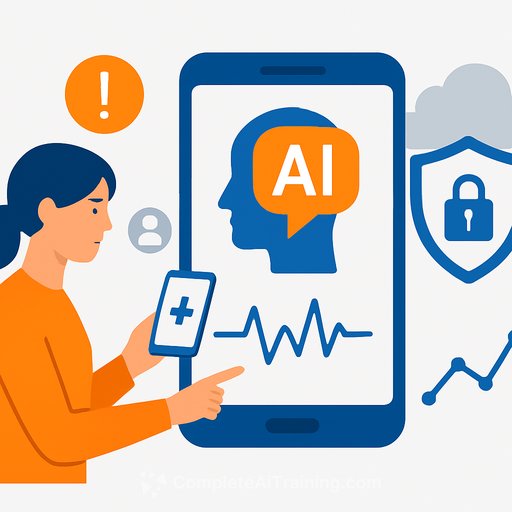
Big Tech's Health AI Assistants Are Moving Into Direct Patient Care
Five major technology companies-OpenAI, Google, Amazon, Microsoft, and Anthropic-now offer consumer-facing health AI tools that users can sync with medical records, wearable data, and lab results. A new analysis in JMIR Publications examines how these platforms are reshaping access to medical guidance, particularly for rural populations and overburdened emergency departments.
The shift from enterprise-focused AI to direct-to-consumer health assistants is complete as of early 2026. These tools go beyond simple symptom checking. They interpret complex medical data in real time and, in some cases, connect users directly to clinicians and pharmacies.
How the Five Platforms Differ
OpenAI's ChatGPT Health relies on scale. It offers free personalized health workspaces to hundreds of millions of users with longitudinal tracking built in, lowering barriers to entry.
Google's Verily Me uses a hybrid model where licensed providers review AI-generated insights before presenting them to users. This positions it as a care delivery platform rather than a standalone chatbot.
Amazon's One Medical Health AI focuses on care orchestration, routing AI triage directly to Amazon Pharmacy and over 200 One Medical clinics.
Microsoft's Copilot Health functions as a navigation tool. It cites sources like Harvard Health and helps users locate clinicians based on insurance and location.
Anthropic's Claude for Healthcare emphasizes safety. It uses constitutional AI to deliver conservative medical guidance and includes heavy disclaimers to build trust.
Privacy and Liability Questions Remain Unsettled
Compliance varies significantly across platforms. Amazon's One Medical and Google's Verily are marketed as HIPAA-compliant. ChatGPT Health and Claude for Healthcare operate in encrypted environments but are not officially covered by HIPAA for consumer use.
The analysis flags a specific risk: health anxiety spirals. Users repeatedly querying AI systems about symptoms could increase follow-up visits to human physicians rather than reduce them, potentially worsening the burden on care systems.
Misdiagnosis remains a concern. These tools lack the clinical judgment and patient history that human doctors develop over years of practice.
A New Entry Point to Healthcare
These platforms represent a structural shift in how people access medical information. Rather than searching for symptoms online or waiting for appointments, users now have multimodal data analysis and direct pathways to care-or at least to triage systems that route them there.
Whether this decentralizes care effectively or simply adds a layer of AI-mediated gatekeeping depends on implementation, regulation, and how well these systems handle edge cases and rare conditions.
For professionals in research and healthcare technology, understanding these platforms' capabilities and limitations is now essential. The systems are live, millions of people are using them, and their clinical impact remains largely unmeasured.
Learn more about AI for healthcare and how these technologies are being deployed in practice.
Your membership also unlocks: