
AI news ·
Brain scans link task-focused AI use to better grades and larger gray matter while emotional AI use tracks with depression and social anxiety
A neuroimaging study of 222 students found that AI chatbot use for tasks linked to higher GPAs and brain volume gains, while emotional reliance on AI correlated with depression and anxiety.
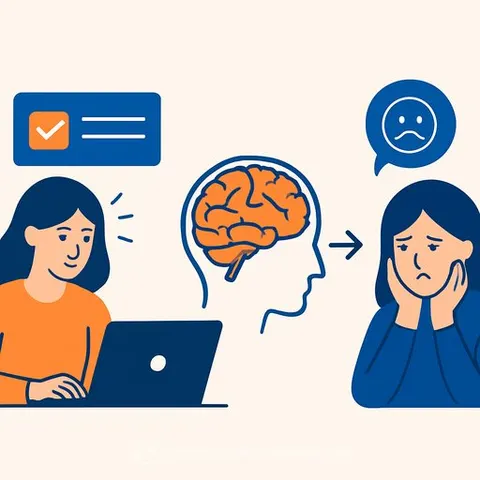
Study Links AI Chatbot Use Patterns to Distinct Brain Structures and Mental Health
A neuroimaging study of 222 university students found that how people use generative AI conversational agents correlates with measurable differences in brain structure, academic performance, and mental health. The research combined behavioral surveys with high-resolution brain scans to distinguish between three usage types: general use, task-oriented use, and socio-emotional use.
Students who used AI chatbots for functional tasks showed higher GPAs and larger gray matter volume in the prefrontal and visual cortex regions. Their hippocampal networks also showed improved clustering and efficiency metrics. The pattern suggests these tools engage cognitive systems that support learning and performance.
A different picture emerged for socio-emotional use. Students who frequently turned to AI for emotional support and social interaction reported higher depression and social anxiety scores. Their brains showed reduced volume in the superior temporal and amygdalar regions-areas involved in social and emotional processing.
The researchers used voxel-based morphometry and network-level analysis to map these associations. They integrated anatomical measurements, network topology, and behavioral data rather than focusing on single brain regions in isolation.
What this means for practice
The findings suggest that usage intent acts as a critical moderator of how AI tools affect the brain and mental health. The same technology can either support cognition or correlate with psychological risk depending on why and how someone uses it.
For educators, interface designers, and researchers working with students, the implication is straightforward: not all AI interactions produce equivalent outcomes. Interventions should account for usage motivation and the specific affordances different tools provide.
What remains unclear
The study identifies associations between usage patterns and brain structure, but cannot yet establish causation. It's unclear whether certain usage patterns reshape the brain, or whether people with particular brain structures gravitate toward specific types of AI use.
Longitudinal studies tracking the same individuals over time would help separate selection effects from neural changes caused by AI use. Researchers also need finer-grained behavioral data-tracking what happens during individual sessions-to better classify usage intent.
For more on this research area, see our coverage of Generative AI and LLM and Research.