
AI news ·
Brookfield builds AI infrastructure stack spanning power, data centers, and compute
Brookfield is combining renewable power, data-center real estate, and compute services through subsidiary Radiant to supply large-scale AI workloads. The three-layer model targets physical infrastructure, not software.
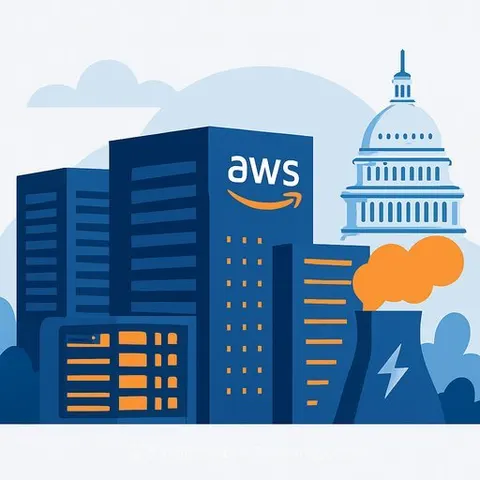
Brookfield Assembles Three-Layer AI Infrastructure Play
Brookfield Corporation is positioning itself as a critical supplier for large-scale AI workloads by combining renewable power, data-center real estate, and compute services. The company is selling contracted power to hyperscalers, developing and leasing AI-optimized facilities, and offering compute capacity through its subsidiary Radiant.
For real estate and construction professionals, this matters directly. Brookfield's moves affect where AI training and inference happens, how facilities are designed and financed, and which properties command premium pricing in the infrastructure market.
The Three-Layer Model
Brookfield's strategy targets the two primary constraints for large AI workloads: power availability and colocated facility capacity.
- Renewable power provision: Long-term contracted power sales to hyperscalers and cloud operators
- Data-center real estate: Construction, ownership, and sale or lease of high-power-density facilities designed for AI workloads
- Compute retail: On-demand capacity sold through Radiant and AI-focused investment products through Brookfield Asset Management
The company's scale and balance-sheet capacity let it absorb the capital intensity of hyperscale infrastructure and lock in customers through long-term agreements. This creates an infrastructure moat rather than competing on software.
What Practitioners Should Track
Contract terms with hyperscalers will reveal how Brookfield structures its deals. Power-purchase agreements, site permits, and partnership announcements with major cloud providers determine how directly Brookfield affects procurement costs for large model training.
Watch how Radiant productizes its compute offerings-whether it sells raw racks, colocated pods, or managed cluster services. Each model has different margin profiles, contractual durations, and operational complexity.
Capacity rollout cadence matters too. Geographic distribution affects latency and redundancy for inference workloads. Power density and cooling efficiency specifications will influence how facilities compete for customer workloads.
The offering mix is critical. Selling physical assets to cloud providers differs commercially from offering on-demand compute; contract structures and operational requirements vary significantly between the two approaches.
Why This Matters for Real Estate
AI infrastructure is increasingly capital-intensive and site-specific. Brookfield's model aligns with the real estate and construction sector because it focuses on physical assets-land, buildings, power systems-rather than proprietary software. This creates sustained demand for specialized facility development and long-term asset ownership.
For professionals in real estate and construction, understanding this infrastructure build-out shapes project opportunities, site selection criteria, and facility specifications for the next generation of industrial properties.
Learn more about AI for Real Estate & Construction and AI for Operations to deepen your knowledge of how AI infrastructure affects property development and facility management.