
AI news ·
Broomfield declares measles outbreak after third case; Colorado AI healthcare regulation clears first legal hearings; winter storm heads for foothills
Broomfield measles cases, Colorado AI bill advances, and a foothills storm are colliding. Move fast: tighten triage/isolation and PEP, note AI review, expand telehealth, staffing.
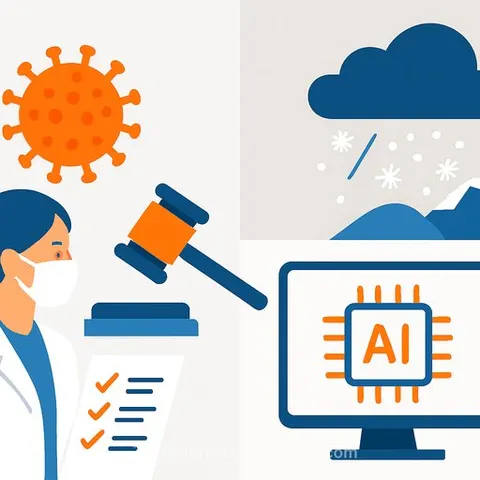
Measles outbreak in Broomfield, AI regulation advances in Colorado, and a foothills winter storm: What healthcare teams need to do now
Three confirmed measles cases in Broomfield have triggered an official outbreak declaration. Colorado lawmakers also advanced an AI-in-healthcare regulation through its first legal hearings. On top of that, a winter storm is set to hit the foothills, which may strain operations.
Here's the short list of actions that protect patients, keep teams aligned, and reduce last-minute chaos.
1) Broomfield measles outbreak: tighten triage, isolation, and PEP
Assume additional exposures are possible. Move fast on triage, isolation, vaccination status checks, and post-exposure prophylaxis (PEP).
- Front-door screening: Ask about fever, cough/coryza/conjunctivitis, rash, and recent travel or exposure at check-in. Provide a mask immediately if measles is suspected.
- Airborne isolation: Place suspected cases in an AIIR/negative-pressure room if available; keep the door closed. If not available, mask the patient, isolate in a closed room, and minimize movement.
- Testing: Coordinate with your lab and local public health on PCR/serology and specimen handling. Clarify courier and after-hours processes today.
- PEP windows: MMR within 72 hours of exposure, or immune globulin within 6 days for infants, pregnant patients without immunity, and the immunocompromised. Verify supply and access pathways.
- Workforce exposure: Audit staff immunity (two documented MMR doses, lab evidence, or birth before 1957 per policy). Exclude non-immune exposed staff per your infection control protocol.
- Communication: Prewrite patient messages (portal, phone tree) explaining symptoms, when to call first, and where to go to avoid waiting rooms.
For clinical guidance, see CDC resources for clinicians here.
2) Colorado AI in healthcare regulation: prepare for documentation, oversight, and vendor transparency
With the bill clearing its first hearings, expect momentum. Even before final rules land, you can reduce risk and shorten your compliance runway.
- Inventory AI use: List every tool influencing clinical or operational decisions (CDS, triage, imaging, revenue cycle). Note data sources, outputs, and risk level.
- Document human oversight: Define who reviews AI outputs, how overrides work, and how decisions are recorded in the chart.
- Vendor diligence: Ask for model purpose, training data description, known limitations, bias testing summaries, and update cadence. Bake these into contracts.
- Risk and incident reporting: Stand up a simple pathway for staff to report AI-related errors or near misses, with a clear review loop.
- Staff training: Teach clinicians the boundaries of each tool-what it's good at, where it fails, and how to challenge outputs.
- Data governance: Confirm HIPAA alignment, role-based access, and logs for who used what, when, and why.
If you're building internal capability and policy literacy, explore AI for Healthcare for practical workflows and training.
3) Foothills winter storm: keep care moving while reducing avoidable risk
Storms expose weak points: staffing, supply chain, and patient communication. Address them before the first snow hits.
- Scheduling: Proactively reschedule non-urgent visits. Expand telehealth blocks for routine follow-ups and medication refills.
- High-risk patients: Call oxygen-dependent, dialysis, infusion, and maternity patients. Confirm plans, transport, and backup power for home equipment.
- Staffing and transport: Set on-call coverage, rideshare reimbursement, and safe-sleep options if staff are stranded.
- Supplies and meds: Stock critical meds (including IG for measles PEP), IV fluids, testing kits, and PPE. Verify generator function and fuel.
- Coordination: Align with local EMS and hospitals on diversion status and transfer protocols.
Track live updates and advisories from the National Weather Service here.
Quick checklist
- Measles: activate airborne isolation, confirm staff immunity, verify PEP supply, prewrite patient communications.
- AI regulation: inventory tools, define oversight, collect vendor attestations, train staff, and log usage and incidents.
- Winter storm: shift to telehealth where possible, support high-risk patients, stabilize staffing, and secure supplies and power.
Simple moves done today prevent crises tomorrow. Pick one action from each section and lock it in before the end of your shift.