
AI news ·
Camunda advances AI-native process orchestration and agentic deployment for enterprise workflows
Camunda is advancing AI-native orchestration to coordinate multiple agents in insurance claims. This detects hidden severity signals earlier to improve loss ratios.
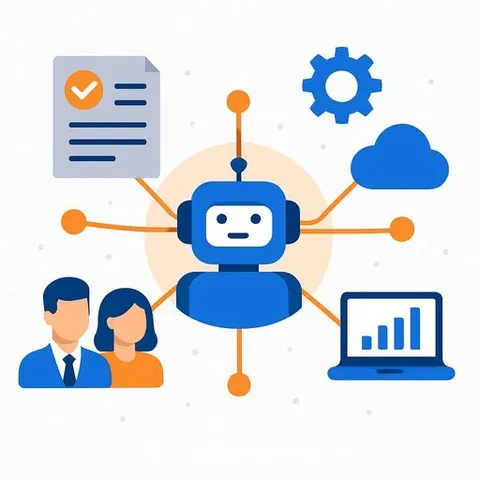
Camunda is advancing its AI-native process orchestration strategy this week, focusing on how coordinating multiple AI agents can surface hidden severity signals earlier in insurance claims. This shift aims to improve loss ratios and operational control for carriers by redesigning operations around AI rather than layering new tools onto legacy systems.
Agentic orchestration in claims
The company highlighted that this "agentic orchestration" can detect complex patterns that single models miss. This capability has the potential to improve loss ratios and operational control for carriers adopting AI for Insurance. Management framed this shift as part of a broader "Great Re-Engineering," where enterprises redesign operations around AI agents instead of simply adding tools to legacy workflows.
ProcessOS and production deployment
The firm promoted its ProcessOS platform as an AI intelligence layer designed to discover how processes actually run and re-engineer them for an AI-native environment. Two LinkedIn campaigns and a webinar series focused on moving these deployments from prototype to production, targeting both business decision-makers in claims operations and technical buyers managing AI Agents & Automation infrastructure. Topics include testing agent behavior, integrating with existing systems, and managing safe progression from staging to production. From a financial perspective, this points to a strategy centered on high-value transformation projects and potentially larger recurring-revenue contracts.
Why this matters for insurance professionals
Claims leaders and operations managers must evaluate whether their current workflows can support multi-agent coordination. Early detection of severity signals directly drives loss ratio improvements, making the transition from prototype to governed production a financial imperative. Teams should audit their existing claims pipelines to identify where automated severity scoring could prevent downstream leakage.