
AI news ·
Celonis acquires MIT-linked Ikigai Labs to build real-time operational context for enterprise AI
Celonis acquired AI startup Ikigai Labs on May 12 to fix a core problem: enterprise AI agents often lack the operational context needed to make reliable decisions. The deal adds Ikigai's graphical models to Celonis's process intelligence platform.
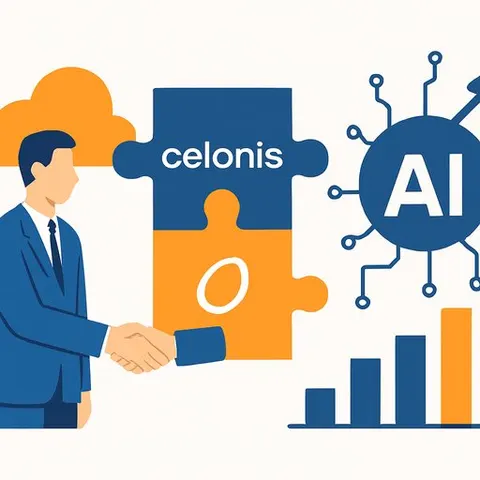
Celonis acquires Ikigai Labs to give enterprise AI operational context
Process mining software company Celonis SE acquired decision-intelligence startup Ikigai Labs on May 12, 2026, to address a critical gap in how enterprises deploy AI agents at scale. The deal gives Celonis technology to build what it calls a "context model" - a real-time digital representation of how a company's operations actually work.
The problem Celonis is solving is straightforward: AI systems often lack the operational knowledge to make reliable decisions. An AI agent might not understand how a specific invoice connects to shipping records because that data sits fragmented across different systems and kept private within organizations.
"Without that deterministic foundation - the ground truth of your operational reality - no AI agent can be trusted to make reliable real-time decisions," said Dan Brown, Celonis Chief Product Officer.
Bridging fragmented data and AI reasoning
Celonis President Carsten Thoma said his company spent over two years developing the context model. The goal was creating what he calls a "holistic business graph" that serves as the foundation for a company's AI operations.
Celonis already had process intelligence from its flagship platform. What it needed was Ikigai's technology - specifically large graphical models designed to help AI systems understand the nuances of proprietary enterprise data.
"AI is only as good as the context it has," Thoma said. "Every organization needs to give its enterprise AI a holistic, living model of how a business truly operates."
Ikigai was founded in 2019 and is led by Devavrat Shah, who also holds a professorial chair of AI at MIT. Shah is now chief scientist for enterprise AI at Celonis.
Early adopters demand precision
Celonis rolled out early adopters including healthcare services firm Cardinal Health LLC. Jerome Revish, Cardinal Health's CTO, explained why operational context matters in high-stakes environments.
"The industry simply cannot accept AI systems that are 'only right most of the time,'" Revish said. "Precision is paramount."
He described how context enables AI agents to support teams "with precision" while guardrails give confidence to deploy systems safely. "Context is what makes the difference between AI that's impressive in a demo and AI that's trusted and safe to deploy," Revish added.
Integration across enterprise systems
The context model integrates with major cloud platforms including Amazon Web Services, Databricks, and Microsoft Fabric. It also connects to Oracle databases and agentic development platforms like Amazon Bedrock, Anthropic's Claude, IBM Watsonx, and Microsoft Copilot.
Celonis competes with SAP's Signavio, IBM Process Mining, and UiPath. Ashu Garg of Foundation Capital, an early Ikigai investor, said the acquisition gives Celonis a significant advantage.
"Celonis has built the deepest operational understanding of how enterprises actually function as a live, process-native model of how work happens, why it breaks and what should happen next," Garg said. "With Ikigai, they've added the decision intelligence and simulation capabilities that make it truly effective."
For operations professionals, this shift signals a broader move in enterprise AI: systems that work reliably at scale require understanding the specific business context where they operate. Learn more about AI for operations managers, or explore AI for Operations.