
AI news ·
Chennai epidemiologist develops AI platform to strengthen preventive care in India
A Chennai epidemiologist built HIVE, a free AI tool that verifies medical advice against patient data and guidelines. It's also offered at subsidized rates for clinics.
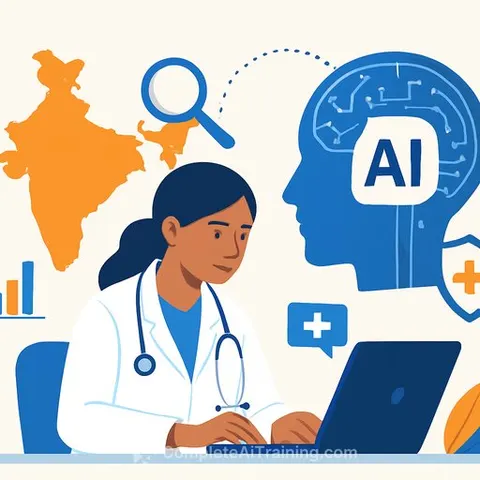
A Chennai-based epidemiologist has developed an AI-powered healthcare intelligence platform that verifies medical recommendations against patient records, clinical guidelines, and published literature - a direct response to the flood of unverified health information reaching millions of Indians online. Dr Viduthalai Virumbi Balagurusamy, founder director of the Honeybee Population Healthcare Foundation (HPHF), built the Healthcare Intelligence and Verification Engine (HIVE) to give doctors and public health workers a decision-support system grounded in evidence rather than algorithmic guesswork.
The platform, offered free to individuals and at subsidised rates for clinics and hospitals, combines clinical expertise with multiple verification layers. It cross-checks recommendations against patient-specific data, current medical literature, public health statistics, and established clinical guidelines. Balagurusamy said the design moves beyond generic AI chatbot responses that pull from unvetted online sources without accounting for a patient's actual medical context.
How the verification model differs from standard AI tools
Most consumer-facing AI health tools generate answers by surfacing information from the web. HIVE integrates the treating doctor's clinical judgement into its output, making each recommendation explainable and traceable to its source. The platform adds to a growing set of AI for Healthcare applications that aim to support clinical decision-making rather than bypass it.
"Healthcare is not just about information. It is about trust, context and verification," Balagurusamy said. "HIVE has been built to ensure that healthcare decisions are supported by reliable evidence, clinical reasoning and patient-specific realities rather than generic responses."
Public health reach and underserved communities
The foundation designed HIVE to work beyond hospital settings. Frontline healthcare workers and public health programmes in underserved communities - where access to specialists remains thin - can use the platform for early risk identification. Balagurusamy said the long-term goal is a preventive healthcare ecosystem that catches diseases early, improves treatment compliance, and helps communities act before conditions become critical.
The platform targets several public health priorities in India: maternal health, anaemia, mental health, non-communicable diseases, perimenopause, menopause, and preventive screening. Community health workers equipped with verified decision-support tools can flag risks earlier and trigger timely interventions that specialist shortages might otherwise delay.
Balagurusamy drew a clear line on AI's role in medicine. "Artificial intelligence should not replace human judgement. It should strengthen it. Our goal is to create a system where technology, clinicians and public health workers work together to improve health outcomes for millions of people," he said.
Why this matters for healthcare professionals
For doctors and public health workers operating in resource-constrained settings, the difference between a generic AI response and one verified against patient records and clinical guidelines is not academic - it directly shapes treatment decisions. HIVE enters the market at a moment when AI-generated health misinformation is a documented risk, and its verification-first architecture offers a model for how clinical AI can augment rather than erode professional judgement. With the platform available at no cost to individuals and at reduced rates for medical institutions, the foundation is betting that wider access to verified healthcare intelligence can shift India's healthcare burden from late-stage treatment toward earlier, cheaper prevention.