
AI news ·
China expands AI use in healthcare as hospitals deploy diagnostic tools and remote imaging services
China has deployed 300 medical AI models across hospitals by May 2025, with county-level imaging services processing over 68 million cases. Data gaps and misdiagnosis risks remain the main barriers to wider use.
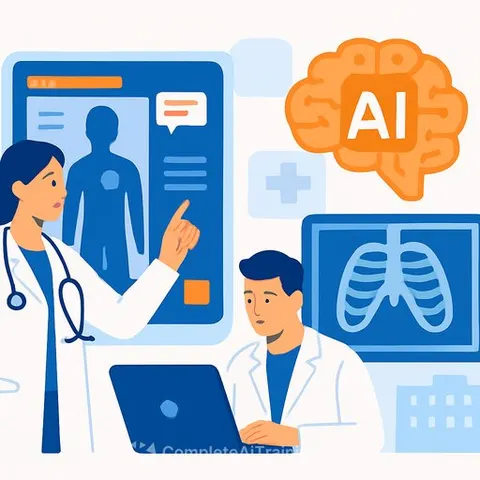
China accelerates AI adoption in hospitals, narrowing gap between doctors and patients
China is embedding AI systems across healthcare facilities to improve diagnosis speed and accuracy. At West China Hospital of Stomatology, an AI system diagnoses more than 30 common dental diseases in seconds and generates visual charts to help patients understand their conditions.
Wang Chenglin, a dentist at the hospital, said the technology reduces time spent explaining complex medical terminology. "AI helps patients understand their conditions more intuitively," he said.
The hospital uses a clinical-grade AI model for oral pathology that assists junior doctors in early detection with 80 to 90 percent accuracy. The system functions as what hospital staff call a "cloud mentor."
National push accelerates deployment
China issued healthcare AI guidelines in 2025 and included AI adoption in its 15th Five-Year Plan (2026-30). The plan prioritizes AI use in assisted diagnosis, precision medicine, health management, and medical insurance services.
By May 2025, China had released 300 medical AI models. County-level remote medical imaging services had processed more than 68 million cases, extending AI tools to grassroots healthcare facilities.
The expansion reflects a broader shift in how doctors work. AI now interprets medical images, assists clinical decisions, and predicts disease risks across Chinese hospitals.
Data quality and accuracy remain obstacles
Medical AI development faces two main challenges: limited access to high-quality medical data and the risk of misdiagnosis.
Healthcare professionals are calling for stronger collaboration between medical institutions and technology companies to build datasets covering imaging, pathology, and biochemical tests. Without standardized, high-quality data, AI systems cannot achieve consistent accuracy across different patient populations and clinical settings.
For healthcare professionals looking to understand how AI for Healthcare systems work or to develop skills in AI Data Analysis, training in these areas is increasingly relevant as hospitals adopt these tools.