AI tools boost smart job matching in China
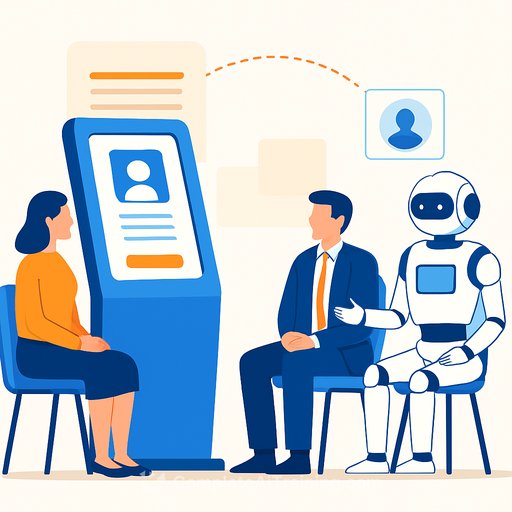
At a talent services conference in Wuhan, AI quietly took center stage. Graduate student Zhang Hui stepped into an AI interview booth, answered questions on camera, and got instant feedback she could replay on her phone. She then uploaded her resume via a QR code and received five role recommendations in under 30 seconds - plus a clear rationale for each match.
That flow is becoming normal across China's HR services ecosystem. Zhang even booked a follow-up interview with a new-energy firm on the spot. Simple inputs. Faster outputs. Less guesswork for both sides.
What HR leaders should notice
Vendors showcased integrated terminals for resume screening, policy interpretation, and optimization. One provider said its tool screens a resume in three to four seconds and lifts recruitment efficiency by at least 80%. The aim isn't to replace people; it's to upgrade every step - sourcing, screening, interviewing, and guidance - with tighter feedback loops.
Beyond campuses, community deployments are expanding. In Nanjing, a smart "employment-at-your-doorstep" station lets residents browse local roles, learn policies, and submit resumes via phone. That's talent outreach without staffing a full branch office.
Policy tailwind and scale
National plans call for wider AI use across industry, public services, and social governance, with a push to gain an edge in application. According to officials, AI is already embedded in HR services - real-time job matching on recruiting platforms, automated interviews, labor market analytics, and personalized training recommendations.
From 2021 to 2025, China's HR services industry delivered over 300 million employment services each year and supported more than 50 million companies in hiring. Online platforms now post hundreds of millions of jobs annually, with AI-driven matching becoming a primary channel.
The constraints to solve
Three friction points keep coming up: data standards are scattered, cross-platform data-sharing is weak, and smaller firms still hesitate to adopt AI. A national "AI Plus HR Services" initiative is set to push standardization, innovation, and a smarter service system. Expect momentum - and pressure to modernize.
Field notes from Wuhan
- Candidate experience matters: AI interview practice helped Zhang, an introvert, stay calm and sharpen responses.
- Speed compounds: sub-5-second resume screens change recruiter time allocation and SLAs.
- Context increases match quality: recommendations worked because the system explained why each role fit.
- Distribution moves local: community terminals unlock access in neighborhoods, not just campuses or fairs.
Playbook: How to apply this in your org
- Start with matching: Pilot an AI matcher on one function (e.g., sales or ops). Feed it structured job data and recent hire outcomes. Track match score vs. interview-to-offer rate.
- Add interview practice: Offer candidates an AI practice booth or link pre-interview. Better prep equals cleaner signals in real interviews.
- Automate first-pass screening: Target a 3-5 second resume screen and tie auto-summaries to must-have criteria. Keep human review for edge cases.
- Build local touchpoints: If you hire regionally, test small-footprint kiosks or mobile flows to surface jobs and collect resumes.
- Close the loop: Show candidates why they match. Transparency improves acceptance and reduces back-and-forth.
Data and governance checklist
- Standardize fields: job family, level, must-have skills, location, compensation bands. Consistency drives better matches.
- Audit bias quarterly: review selection rates and score distributions by demographic where legally permissible.
- Explainability: store rationale for match scores and interview decisions. Share summaries with hiring managers.
- Privacy and consent: document data flows end-to-end. Minimize retention windows for interview recordings.
- Human-in-the-loop: set thresholds where recruiters must review or override the model's recommendation.
Metrics to track
- Time to shortlist (target reduction: 40-60%).
- Interview-to-offer conversion (should improve with better matching).
- Quality of hire at 90 days (manager rating + early attrition).
- Candidate NPS for the application and interview process.
- Cost per hire and recruiter capacity (reqs per recruiter).
What's next
Expect broader standards, lighter-weight tools for SMEs, and more cross-region data pipes. The edge goes to teams that pair speed with clarity - fast match, clear rationale, clean handoffs to humans.
As Zhang put it, "If AI can help me understand myself better and find the right job faster, that's already a big step forward." For HR, the same logic applies: understand your signals better, move faster, and let AI do the busywork.
Upskill your team
If you're building AI capability inside HR, a structured path helps. See practical options by role at Complete AI Training.
Your membership also unlocks: