
AI news ·
China prepares policy to assess AI impact on employment
China's labor ministry announced a three-pillar plan to manage AI job disruption. The 2026 policy targets stabilizing at-risk work, expanding tech roles and funding retraining.
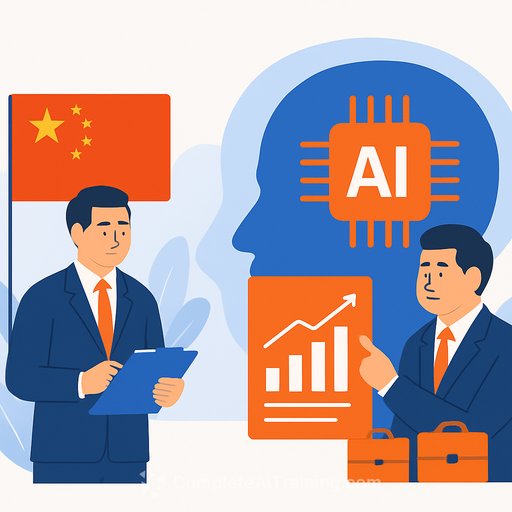
China's Ministry of Human Resources and Social Security will release a policy document titled "Responding to the Impact of AI on Employment" that outlines a three-pillar strategy to stabilize, expand, and improve jobs, the ministry announced on January 27, 2026. The move signals that the world's second-largest economy is treating AI-driven labor disruption as a first-order policy concern - not a side effect to be managed later.
From directive to national strategy
In August 2025, China's State Council issued its "AI+" Action Plan, directing agencies to strengthen employment risk assessments tied to AI applications and steer AI innovation toward sectors with high job-creation potential. By October, Hunan Province published its own implementation plan that emphasized thorough local labor market assessments and directing resources to industries likely to generate new jobs.
The coming MOHRSS document pulls those threads into a single national strategy. Its three pillars are: stabilizing existing jobs threatened by automation, expanding employment in AI-adjacent fields, and improving the quality of work that remains.
New standards and new job categories
A new national standard for generative AI has also introduced guidelines for conducting employment impact evaluations, though the guidelines are not yet mandatory. Meanwhile, China has begun adding AI-related occupations to its official job catalogues, aiming to encourage human-AI collaborative roles rather than pure replacement.
Preempting disruption before it hits
Domestic companies including Baidu, Alibaba, and a wave of generative AI startups have been deploying models across customer service, content creation, coding, and manufacturing. Rather than waiting for mass layoffs to trigger a crisis, Beijing wants to identify at-risk jobs early and channel resources toward retraining and transition support.
The EU's AI Act focuses on safety and rights, and the US has taken a lighter regulatory touch. China's employment-centered framework represents a third approach, one where job displacement is the immediate concern.
Why this matters for HR professionals
For HR teams operating in China or for multinationals tracking regulatory trends, this policy framework has immediate implications. Job impact assessments are likely to become a standard part of workforce planning - whether mandatory or not - as the government signals its priorities. HR leaders will need to identify at-risk roles, redesign jobs for human-AI collaboration, and build reskilling pipelines that align with the sectors the state favors: education technology, retraining platforms, and collaboration tools. The national push also suggests that retraining and transition support will get more funding and policy backing, making it a strategic lever for HR to pull rather than a cost to justify.