
AI news ·
Chinese sci-fi writer Hao Jingfang reveals AI role in new books, sparking debate
Hao Jingfang used AI to write half her children's series, igniting debate. China has no rules requiring creators to disclose AI use.
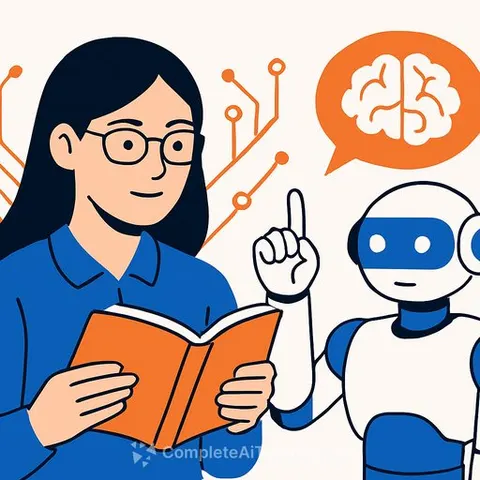
Acclaimed Chinese science fiction author Hao Jingfang revealed this month that she used artificial intelligence to write half of her latest children's series, telling an interviewer that "readers can't tell which parts" are machine-generated. The admission has ignited a debate over transparency and the role of AI in creative work-at a time when China has no national rules requiring books to disclose AI involvement.
How the AI-assisted writing worked
Hao built a custom AI profile using her past novels and character designs as a knowledge base. After training, the system generated passages that matched her established style. She used that profile to produce the final two books in her five-volume children's science fiction series, Galaxy Academy. In a June 3 interview with domestic media-since removed-she said her publisher's editors "kept praising" the AI-assisted sections.
Reader and writer backlash
The reaction on Weibo was swift. One user wrote, "As creators are gradually being replaced by AI, she's actually taking pride in readers' inability to tell the difference." Another took a different view, calling the disclosure honest and better than editors who concealed AI use, but added that writers should always label AI-generated content.
Hao pushed back in a June 16 follow-up interview. "Every line was ultimately written by me," she said. She described the AI's role as helping with research, plot ideas, and writing techniques. She plans to label future publications as "created with AI assistance."
A divided literary community
Nobel laureate Mo Yan said AI can serve as a tool to assist writers but argued, "any ambitious writer should not surrender to the pressure of AI and should continue pursuing original creation." Science fiction author Chen Qiufan, who has publicly used AI in his work since 2017, described his attitude as somewhere "between embracing it and remaining vigilant."
Hao herself has previously drawn a sharp line between machine output and human artistry. In a 2025 essay, she wrote that AI is fundamentally "data-driven" and tends toward "conformity," while only "sincere and committed creators" can develop truly distinctive styles. "My writing today is an exploration of the future of human-AI collaboration," she said this month. "I'm exploring how AI and I can evolve together."
Why this matters for writers
The controversy arrives as platforms and audiences increasingly expect clarity about how a text is produced. For working writers, the line between tool and co-author is shifting fast. Mastering skills like Prompt Engineering-which governs how AI responds to creative direction-can help writers maintain control over narrative voice while speeding up research and drafting. Hao's experience also underscores a practical reality: readers and editors may reward efficiency, but they will push back if they feel that disclosure was withheld.