
AI news ·
ChristianaCare's patient education director says AI falls short if patient information isn't useful
AI-generated patient communications fail when patients can't understand them, warns ChristianaCare's Greg O'Neill. Test outputs with real patients and review them regularly-volume is the machine's job; clarity is yours.
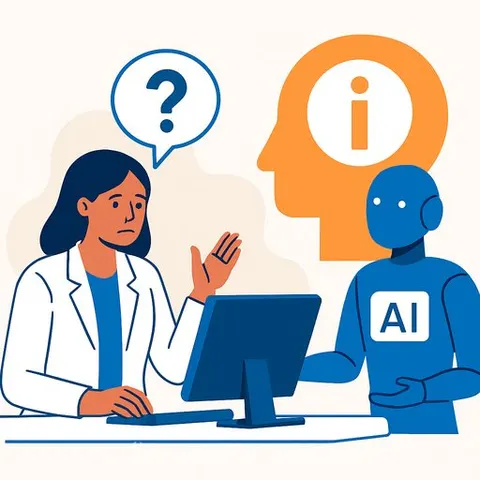
Health Systems Must Ensure AI Patient Communications Actually Help People
AI can speed up workflows across health systems, but the technology fails if patients and families can't understand or use the information it produces. That's the core message from Greg O'Neill, director of patient education at ChristianaCare.
O'Neill's point cuts to a common gap in health system AI adoption. Hospitals invest in tools that optimize clinical operations and reduce administrative burden. But if those same tools generate patient-facing content that's unclear, overly technical, or irrelevant to someone's actual needs, the investment misses its mark.
For communications professionals working in health systems, this distinction matters. Your role sits at the intersection of clinical AI deployment and patient experience. When AI tools generate discharge instructions, appointment reminders, or educational materials, you're responsible for ensuring that content lands with the people who receive it.
What This Means for Your Work
If your organization is piloting AI for patient communication, test outputs with real patients before rollout. Ask whether the language matches their reading level. Check whether the information answers their actual questions, not just the questions the system was trained to address.
O'Neill's observation also suggests a workflow change. Rather than treating patient-facing AI as a set-and-forget system, communications teams need to review and refine outputs regularly. The technology handles volume and consistency. You handle clarity and relevance.
Learn more about AI for PR & Communications and AI for Healthcare to understand how these tools fit into your organization's broader strategy.