
AI news ·
Commercial insurers prioritize AI governance and explainability over rapid deployment
Insurers prioritize AI governance to avoid model errors causing millions in losses. Cross-functional teams now mandate human oversight for underwriting decisions.
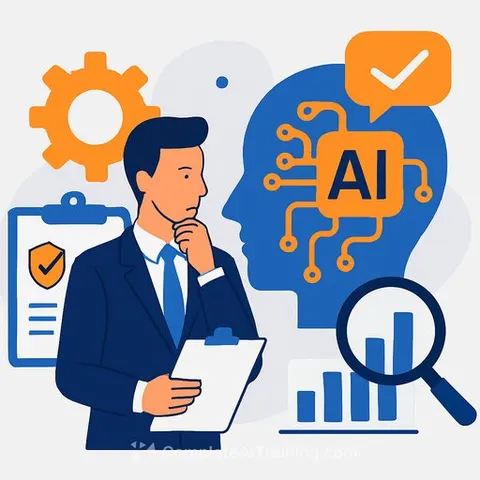
Commercial insurers are moving from a race to deploy AI toward a harder question: how to govern it responsibly. IntellectAI, which builds AI-driven underwriting and claims systems for carriers, said on June 26, 2026, that the consequences of getting models wrong now outweigh the speed of deployment. A flawed model can decline profitable business, introduce pricing bias, or generate inaccurate policy language-errors that translate into losses in the millions.
Efficiency gains from AI are already measurable. Underwriters spend less time on administrative work and more on complex risk evaluation. But as models move deeper into submissions, fraud detection, and broker servicing, the need for transparency becomes urgent. IntellectAI said explainability is now a central concern. "If an AI system recommends a premium increase for a manufacturing client, underwriters and compliance teams need to understand whether that recommendation stems from claims history, location exposure, industry loss trends, or financial signals," the company said. Without that clarity, trust collapses-and the ability to defend decisions to regulators and reinsurers vanishes.
Who owns AI governance now
Governance ownership has shifted from a purely technical domain to a cross-functional priority. Underwriting leadership, legal, compliance, cybersecurity, and boards of directors are now deeply involved. Discussions that were once theoretical-model approval, training data, audit trails, human review requirements, model drift-are operational demands. This structural change reflects the reality that AI errors in commercial lines carry financial and regulatory weight that technology teams cannot shoulder alone.
Human-in-the-loop gains traction
One pattern IntellectAI observes across carriers is the rise of human-in-the-loop models. AI surfaces insights and recommends actions, but experienced underwriters make the final decision. This design preserves the efficiency case for automation while addressing the accountability demands of commercial insurance, where contextual judgment resists full automation. The technology functions as an assistant, not a replacement, which helps carriers satisfy both internal governance requirements and external expectations from brokers and enterprise clients.
Governance as a market advantage
Carriers are discovering that strong AI governance can differentiate them in a trust-based industry. Brokers and large clients now ask directly how AI is used in underwriting, how data is protected, and whether decisions can be reviewed or challenged. Firms that can answer those questions clearly are strengthening relationships. For professionals building these capabilities, understanding AI for Insurance workflows-from model audit trails to human review protocols-is becoming part of daily operations, not a future project.
Why this matters for insurance professionals
The governance conversation has moved from theory to practice. Underwriters, claims managers, and compliance officers are now on the front line of model accountability. Being able to explain an AI recommendation, flag model drift, or document a review process is no longer a niche skill. It is table stakes for maintaining broker trust and regulatory standing. The carriers that treat governance as an operational discipline, not a checkbox, will be the ones that scale AI without breaking the trust that commercial insurance runs on.